
Last updated November 22, 2026
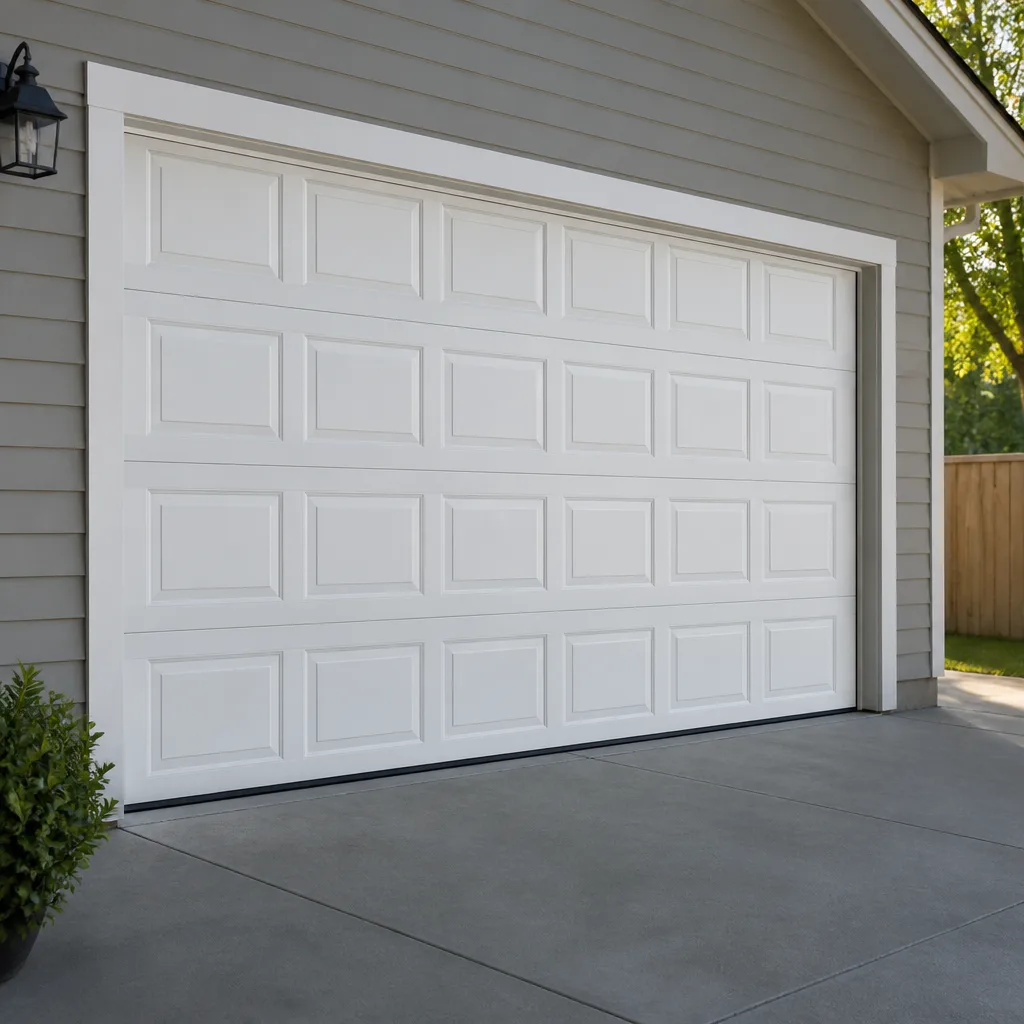 Raised-panel steel
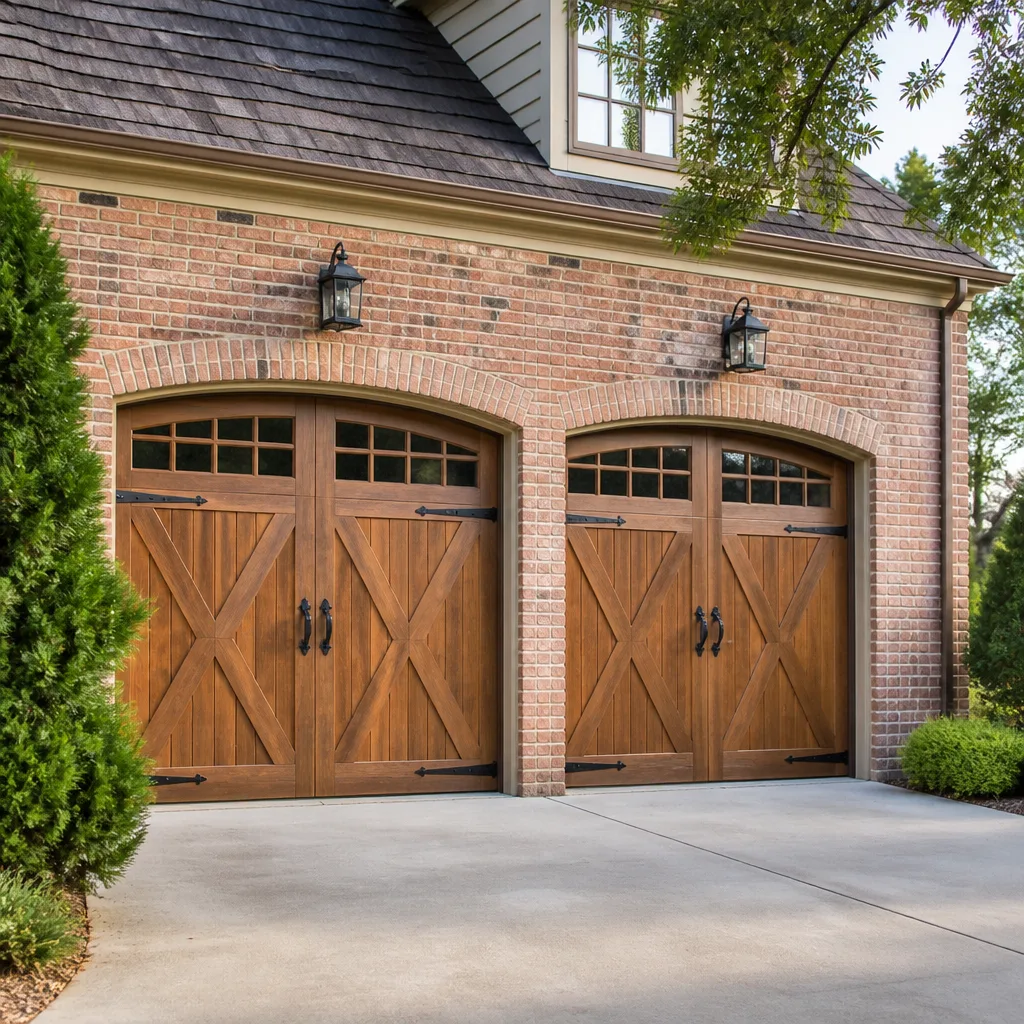 Carriage house
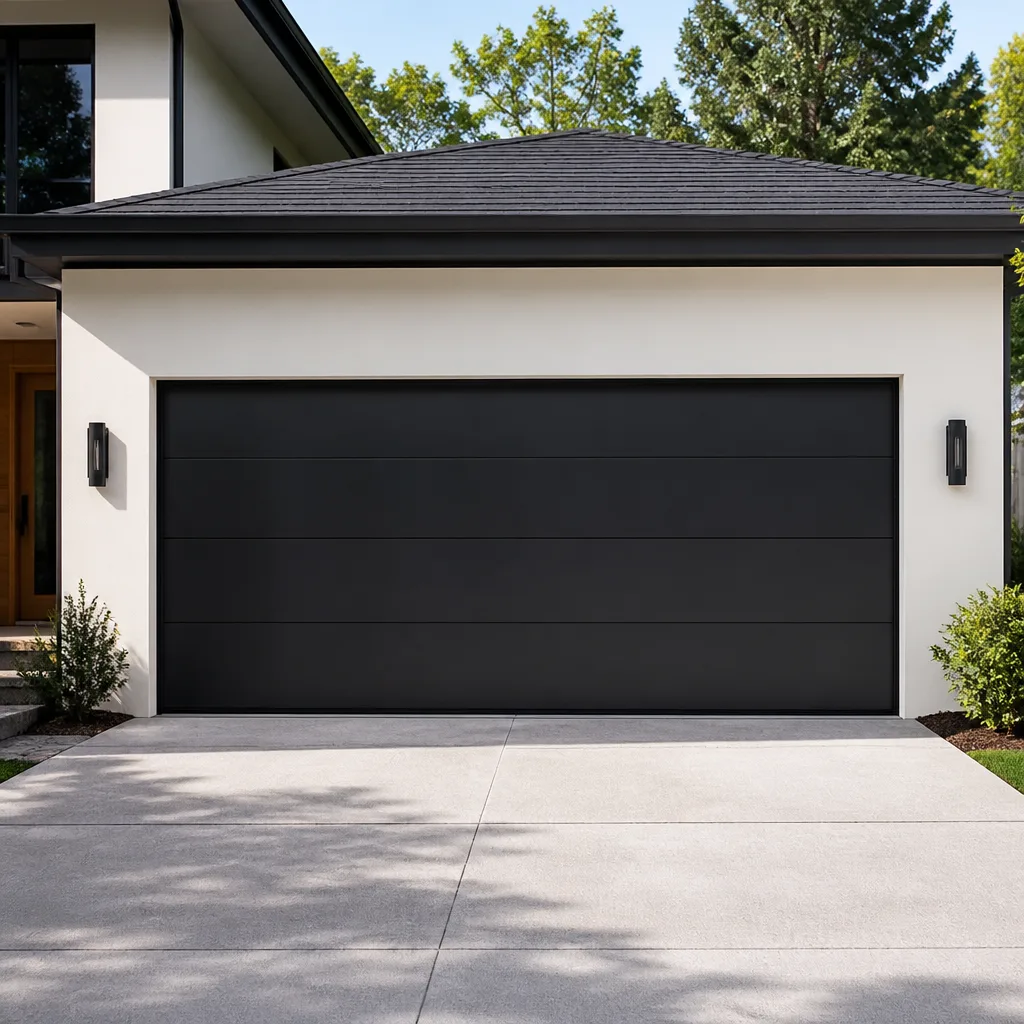 Modern flush
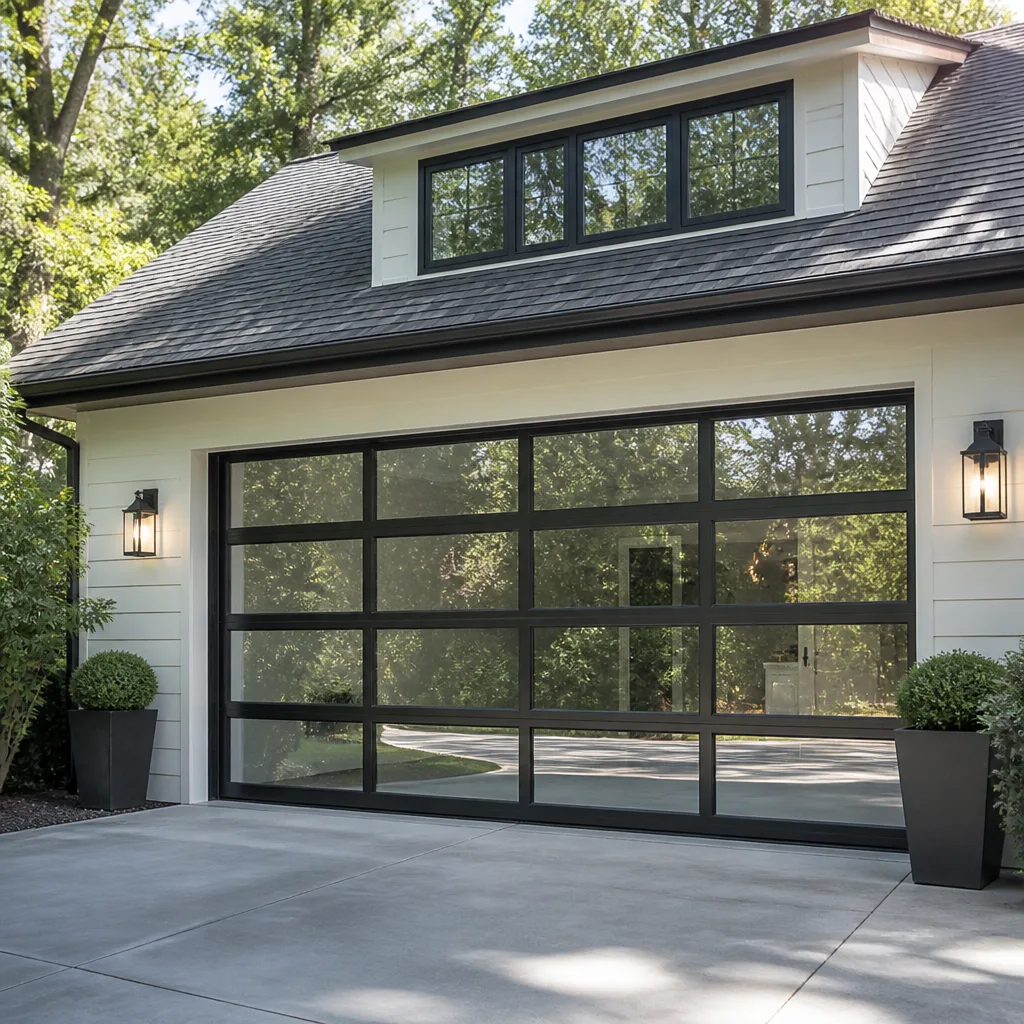 Full-view glass
 LiftMaster openers
 Chamberlain openers
Full 25-point door and opener safety check with every visit - springs, cables, rollers, tracks, and your LiftMaster or Chamberlain opener included
You get a price before we start. It does not change when the pro arrives.
Get your free estimateGarage Door Warning Signs: A Lynn Homeowner’s Reference Guide
A garage door that takes two seconds longer to open than it did six months ago isn’t “getting old.” It’s a measurable symptom of a specific mechanical problem, and that problem has a name, a cause, and a repair cost you can predict before it fails. Most Lynn homeowners wait until something snaps, jams, or won’t close before they call anyone. By then, a small fix has usually become a bigger one. This guide walks through the sounds, the visual cues, and the opener behaviors that tell you what’s actually happening inside your door system, plus a triage system for deciding what’s urgent and what can wait. We’ve watched hundreds of Lynn doors fail in predictable ways, and the signs are almost always there first.
Quick Answer
Garage door warning signs fall into four categories: unusual sounds (grinding, scraping, popping, rattling), visual asymmetry (a door that closes crooked or has a visible gap), opener behavior changes (hesitation, reverse, slowed speed), and hardware wear (rust streaks, white residue, a swollen bottom seal). A grinding or popping noise plus a crooked door usually means a cable or spring problem that needs attention before the door is used again. In Lynn’s freeze-thaw climate, rust streaks and swollen seals show up faster than in milder regions, which makes local inspection timing different from what generic advice suggests.
Styles & brands we work with
- Raised-panel steel
- Carriage house
- Modern flush
- Full-view glass
- LiftMaster openers
- Chamberlain openers
Table of Contents
- What the Sound of Your Door Is Telling You
- The Visual Asymmetry Test: Reading Your Door’s Gap Pattern
- Opener Behavior as a Diagnostic Tool
- Lynn-Specific Wear: Freeze-Thaw, Rust, and Mineral Deposits
- Severity Triage: Schedule Soon, This Week, or Stop Now
- Seasonal Timing: When Lynn Doors Break Most Often
- What You Can Check Yourself vs. What You Shouldn’t Touch
- Repair or Replace: Reading the Accumulated Warning Signs
What the Sound of Your Door Is Telling You
Every garage door has a signature sound, and a change in that sound is the earliest and most reliable warning you’ll get. A door that runs quietly for years and then starts making a new noise is broadcasting exactly where the wear is happening. The tricky part is that most homeowners describe all noises the same way: “it’s making a weird sound.” Here’s how to translate what you’re hearing.
Grinding is the sound of metal-on-metal friction, and it usually comes from one of three places: worn rollers that have lost their bearings, a torsion tube or bearing plate that has lost lubrication, or a hinge that has bent out of alignment. Grinding tends to be continuous through the whole travel of the door, and it gets worse when temperatures drop because cold thickens the grease in the rollers.
Scraping is different. It’s intermittent, often at one specific point in the door’s travel, and it usually points to a door that’s out of alignment, a panel rubbing against the frame, or a track that’s been bent or has shifted. Scraping left alone chews into the panel edge and can turn a simple track adjustment into a panel replacement.
Popping is the sound that deserves the fastest attention. A single loud pop, especially when the door is starting to open, is typically one of two things: a torsion spring that has just snapped, or a cable that has jumped its drum. A popped spring means the door is now supported unevenly, and continuing to use the opener risks burning out the motor or dropping the door.
Rattling is the mildest, and the most commonly ignored. Loose bolts on the hinges and brackets rattle over time, and it’s usually a ten-minute tightening job. But rattling can also be a loose track bolt or a bracket pulling away from the jamb, and those become dangerous when the door is under tension.
In our experience across Lynn’s older homes, grinding and popping are the two sounds that most often arrive together, and when they do, it’s usually a spring that’s failing while the door is running on unlubricated hardware. Listen to your door once a month from inside the garage with the door closed, then opening. If you can name the sound, you can usually narrow the repair to one or two components.
The Visual Asymmetry Test: Reading Your Door’s Gap Pattern
A garage door that closes slightly crooked is diagnosing itself. The gap pattern at the bottom of the door, viewed from inside with the door closed, tells you which side of the system is losing tension or carrying too much weight. This is the test most homeowners skip, and it’s the one that catches spring and cable problems weeks before they fail completely.
Here’s how to run the check:
- Close the door fully, then stand inside the garage and look at the horizontal gap between the bottom panel and the floor.
- Compare the gap on the left side versus the right side. Even gaps are fine. A gap that is visibly larger on one side than the other is a warning.
- Run the door up and look at the vertical gaps between the door and the left and right tracks. The panel should sit evenly in both tracks.
- Look at the cables on both sides. Both cables should be under similar tension, with no slack, fraying, or loose coils at the drum.
- Check the hinge lines. If one side’s hinges are separating or the panels are visibly out of line with each other, the door has racked.
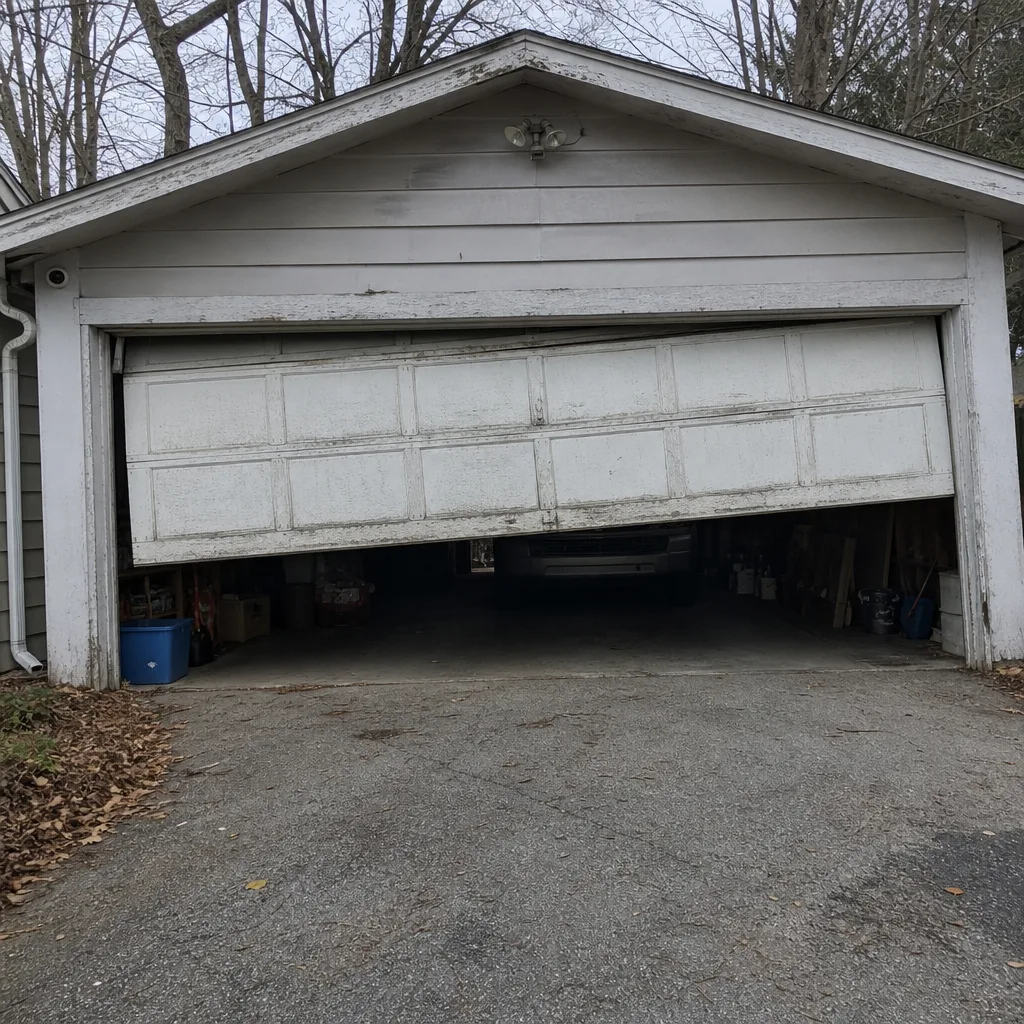
What the gap pattern means in practice: a bottom gap wider on the left side usually points to a failing spring on that side (or a cable that has slipped its drum). A door that stands correctly when closed but sags on one side when it starts to open means the spring is losing torque on that side. A door that sits high in both tracks and refuses to seat properly can indicate that a hinge or a panel has bent, especially if the door has recently taken a hard hit, a bump from a car, or a wind gust against it while it was open.
In Lynn, where a lot of housing stock sits on older foundation slabs and tracks have been adjusted many times over the years, asymmetry is common enough that homeowners assume it’s just how their door is. It isn’t. A crooked door and a failing spring belong to the same diagnosis, and a technician can usually confirm the cause in a few minutes of inspection.
Opener Behavior as a Diagnostic Tool
Your opener is not just a motor; it’s a sensor. How it behaves when you press the remote is often the clearest signal of an underlying problem, because modern openers are built to detect resistance and react to it. If you know garage door opener repair as a specialty, the behaviors below will make sense as symptoms of the door hardware, not just the motor.
Hesitation at the start of travel, where the opener clicks or strains for a second before the door moves, is usually a sign of extra resistance in the door itself: dry rollers, a stiff hinge, or a spring that is no longer providing enough counterbalance. The opener is working harder than it should, and that extra load shortens its life.
Reversal, where the door starts down and then goes back up on its own, is a safety response. The opener thinks it has hit an obstruction. It can be a misaligned safety sensor, a small object under the door, or a track that’s binding. If you can rule out an object and the reversal keeps happening, the sensor or the door alignment needs a look.
Speed changes are the subtle one. If the door has begun opening noticeably slower than it used to, the opener is fighting resistance somewhere in the system. A door that runs fast going up and slow coming down, or vice versa, points to a spring or a track that is not balanced against the door’s weight.
Most openers in Lynn homes are one of a handful of brands we work on regularly, including LiftMaster, Chamberlain, Genie, and Craftsman. Each brand’s opener has different diagnostic behavior, and knowing how a specific model responds to load matters. A blinking error-code pattern on a LiftMaster doesn’t mean the same thing as a Genie’s beep sequence. That’s the difference between a trial-and-error fix and a precise one.
Lynn-Specific Wear: Freeze-Thaw, Rust, and Mineral Deposits
Lynn’s climate is hard on garage door hardware in ways that don’t show up in most general garage door guides. The freeze-thaw cycle that runs from late fall through early spring does three things to a door system, and each shows up as a specific warning sign.
Rust streaks are the most visible. When moisture gets into the hinges, the bolt heads, or the track bolts and then freezes, it expands and forces the metal slightly, and the protective coating cracks. The rust streak that starts as a thin orange line along the hinge line is the earliest evidence that water has been sitting inside the hardware. Left alone, the hinge stiffens and starts grinding.
White mineral deposits on the roller stems, the torsion tube, and the track are a less obvious sign. They form when moisture evaporates off the metal and leaves behind dissolved minerals. They’re not dangerous by themselves, but they’re a marker that the hardware has been wet, which means lubrication has likely been washed away. Grease that has been washed out leaves the rollers running metal-on-metal.
Swollen bottom seals are the most seasonal. The rubber seal at the bottom of the door absorbs moisture during wet periods and then freezes and expands during cold snaps. A seal that swells can lift the bottom panel slightly, which changes the gap pattern, which puts extra strain on the hinges at the corners. In Lynn, this typically shows up in late winter as a door that suddenly doesn’t seat cleanly.
These three signs are why we recommend a visual check every spring and every fall: once in October before the first hard freeze, and once in April after the thaw. That schedule catches most freeze-thaw damage before it becomes a component failure. A door that has been running without lubrication through a Lynn winter will often show rust and white deposits at the same time by spring.
Severity Triage: Schedule Soon, This Week, or Stop Now
Not every warning sign is urgent. But some are. The single most useful skill a homeowner can build is the ability to sort warning signs into three buckets: schedule soon, this week, or stop using the door now. The difference between the buckets is not about how loud the noise is, but about the risk to the person and the door.
Schedule soon (within the next few weeks):
- Grinding or rattling that’s steady but not getting worse
- Rust streaks on hinges and bolts
- Loose bolts on hinges and brackets
- A single slow spot during the door’s travel
- Slight speed change in the opener
This week (don’t put it off):
- A door that closes crooked, with a visible gap difference at the bottom
- Repeated opener reversal with no obstruction
- Scraping against the track at one point of travel
- A visible slack or fraying on a cable
- A door that has begun opening with a noticeable hesitation
Stop using the door now (call for emergency service):
- A loud pop, followed by the door becoming hard to lift
- A visibly broken spring (a clear gap in the coil)
- A cable that has come off its drum or is visibly tangled
- A door that hangs open or drops hard on one side while moving
- Any sign that the door has come off its track
The stop-now category is the one where safety matters most. A torsion spring stores enormous energy, and a door that is not properly counterbalanced can drop fast enough to cause serious injury. If you’re in the stop-now bucket, leave the door closed, disconnect the opener if you can safely do so from the release cord with the door down, and call for help. Our garage door spring repair work is the most common emergency call we get, and the spring is the component most responsible for the stop-now signs.
Seasonal Timing: When Lynn Doors Break Most Often
Warning signs cluster around two windows in Lynn, and knowing the timing helps you plan rather than react. The first cluster is late October through December, when the first hard freezes hit a door that has been running on summer-dry lubricant and slightly loose hardware. The second is March through April, when the thaw loosens soil under slabs, cycles the seals, and reveals the rust that built up over winter.
The October checklist matters most for older homes in neighborhoods like the Highlands, the Diamond District, and along Western Avenue, where garages tend to be attached to houses that have had many track adjustments over the years. The April check matters most after any winter with heavy snow load on the roof, because a door that was under unusual roof weight for months often shows a hinge or panel shift when things warm up.
Between those two, the summer months are when worn opener components tend to surface, because the door runs more often with longer days and higher temperatures. Heat expands the torsion spring slightly, which changes tension, and a spring that’s near the end of its life will often fail in August rather than December. In our experience, July and August calls to Lynn Garage Door Repair Co lean toward opener and roller wear rather than spring failure, while the cold months lean the other way.
If you’ve noticed a warning sign in the fall and told yourself you’ll deal with it in the spring, you’re in the majority. The problem is that the average Lynn winter is exactly when a worn component goes from “noisy” to “broken.” Our garage door repair schedule fills fastest in the first two weeks of cold weather, so if a sign shows up in October, the smart call is before the first hard freeze.
What You Can Check Yourself vs. What You Shouldn’t Touch
There’s a clear line between what a homeowner can safely inspect and what can only be handled by a trained technician. Respecting that line is the difference between catching a problem early and getting hurt.
- Safe to check yourself: Listen for sounds once a month. Watch the gap pattern at the bottom of the door. Wipe rust streaks and white residue with a cloth to see if they return. Look for fraying on the cable without touching it. Check that the opener reverses correctly using a small object placed in the door’s path (never your hand).
- Safe to do: Tighten visible hinge and bracket bolts with the door fully closed. Lubricate the hinges, rollers, and track rollers with a proper garage door lubricant. Wipe rust off before it sets in. Replace the rubber seal if it has swollen and no longer seats.
- Not safe to attempt: Adjust or replace a torsion spring. Touch a cable that is under tension. Straighten a bent track. Reattach a door that has come off its track. Replace a hinge on a door that is under spring tension.
The reason for the hard line is simple: a torsion spring under tension and a cable under tension are storing enough force to cause severe injury, and there is no safe way to handle either without proper tools and training. A homeowner can easily spend a weekend trying to adjust a spring and end up with a door that drops on its own. We handle spring replacement as a core specialty rather than a side job, precisely because the risk doesn’t allow for shortcuts.
If you’re not sure whether what you’re seeing is a “check” or a “call,” call us. Estimates are free, and a trained set of eyes on the door is the difference between a repair and a replacement.
Repair or Replace: Reading the Accumulated Warning Signs
Single warning signs almost always point to repair. It’s when several signs stack up on the same door that replacement starts to make more financial sense. The tipping point is usually when the cost of restoring the system approaches a meaningful fraction of what a new door would cost, and when the door’s remaining components are all about the same age.
Repair is usually the right call when:
- One component is failing but the rest of the door is in good shape
- The panels are intact and the door runs straight in the tracks
- The opener is under roughly a decade old and behaving normally otherwise
- The damage is cosmetic or isolated to hinges, rollers, or a seal
Replacement starts to win when:
- Multiple springs and cables have failed within a few years
- The panels are dented, rusted through, or have been repaired more than once
- The door has been off its track more than once, suggesting structural problems
- The opener is old enough that the door is outrunning it
In Lynn, the homes with Clopay or Amarr doors that are twenty or more years old tend to fall into the replacement category once any two of those signs line up. We work on both brands regularly, and knowing the specific hardware patterns of each makes the repair-versus-replace call faster. A new door is measured and ordered, so there’s no reason to rush the decision: a free measure and a written price give you a real number to compare against the repair estimate. That’s the honest way to make the call. If you’re comparing it to something like garage door opener repair, the numbers are not the same kind of comparison.
Wayne Dalton and Craftsman doors show up in Lynn too, and they tend to hold up a bit longer before replacement becomes the call, mainly because the component systems are simpler. The rule of thumb we use is whether the door can be brought back to running straight and quietly through a full open-and-close cycle. If it can, repair is usually the better value.
Common Mistakes to Avoid
- Assuming a slow door is just “getting old.” A door that has slowed down has almost always developed resistance somewhere in the system, and that resistance wears out the opener faster. Treat speed changes as a diagnosis, not a personality trait.
- Lubricating with the wrong product. WD-40 is not a garage door lubricant; it’s a solvent, and it washes away the grease that the rollers need. Using it in Lynn’s freeze-thaw climate makes the cold-weather grinding worse, not better.
- Ignoring a crooked door because it “still closes.” A door that closes crooked is under uneven tension, which is exactly the condition that shortens spring life. The gap pattern is free information; use it.
- Trying to adjust a torsion spring yourself. The spring is under enough tension to cause serious injury, and there’s no safe home adjustment. This is the one item where the smart move is always to call.
- Replacing springs one at a time. A matched pair of springs is designed to carry the door together, and replacing one side leaves the older spring doing half the work of a new one. Replace them in pairs.
- Skipping the fall check because “the door worked all summer.” Lynn’s first freeze is what turns summer symptoms into winter failures. A twenty-minute October inspection saves most of the emergency calls we see in November.
- Calling whoever answers first instead of a garage door specialist. A general handyman will guess at a brand-specific problem. Knowing how a Clopay or Amarr door behaves under load is what turns a two-visit guess into a single repair.
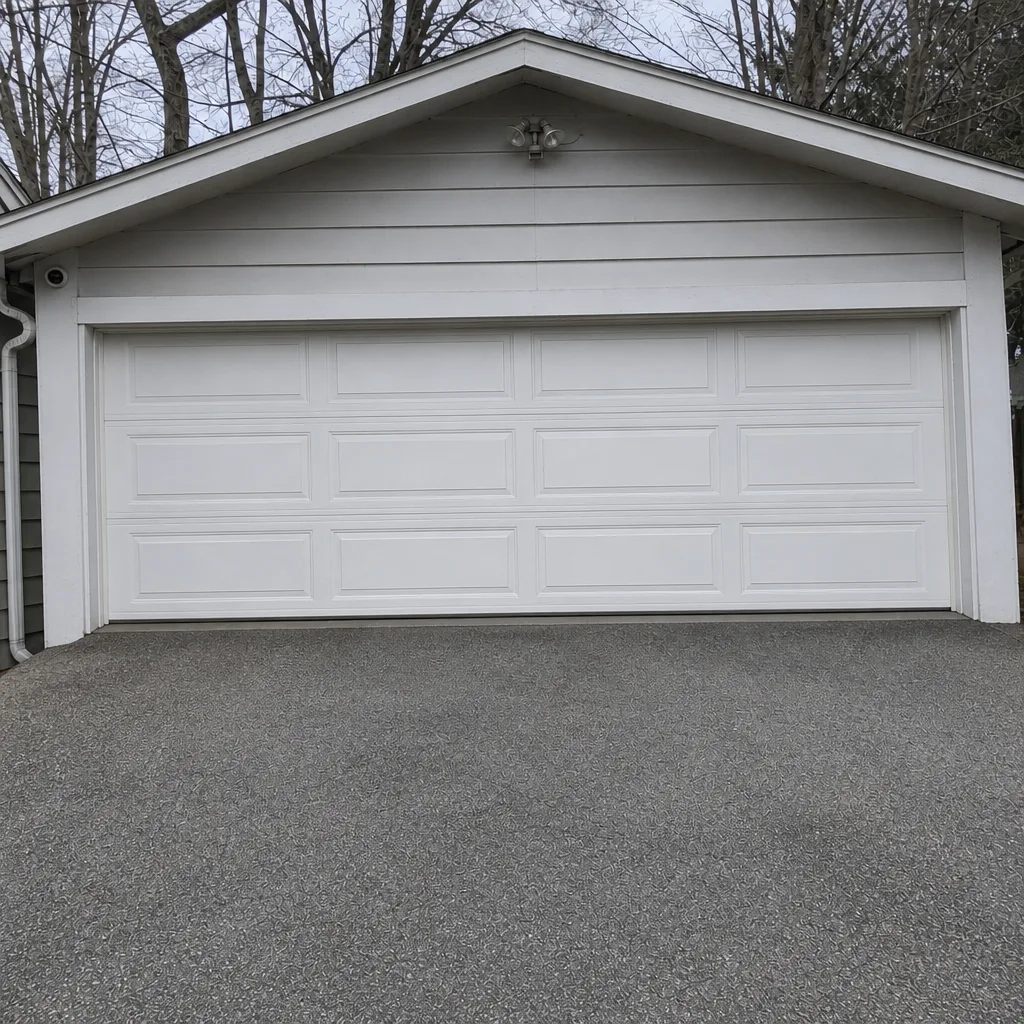
See the difference
 Before
 After
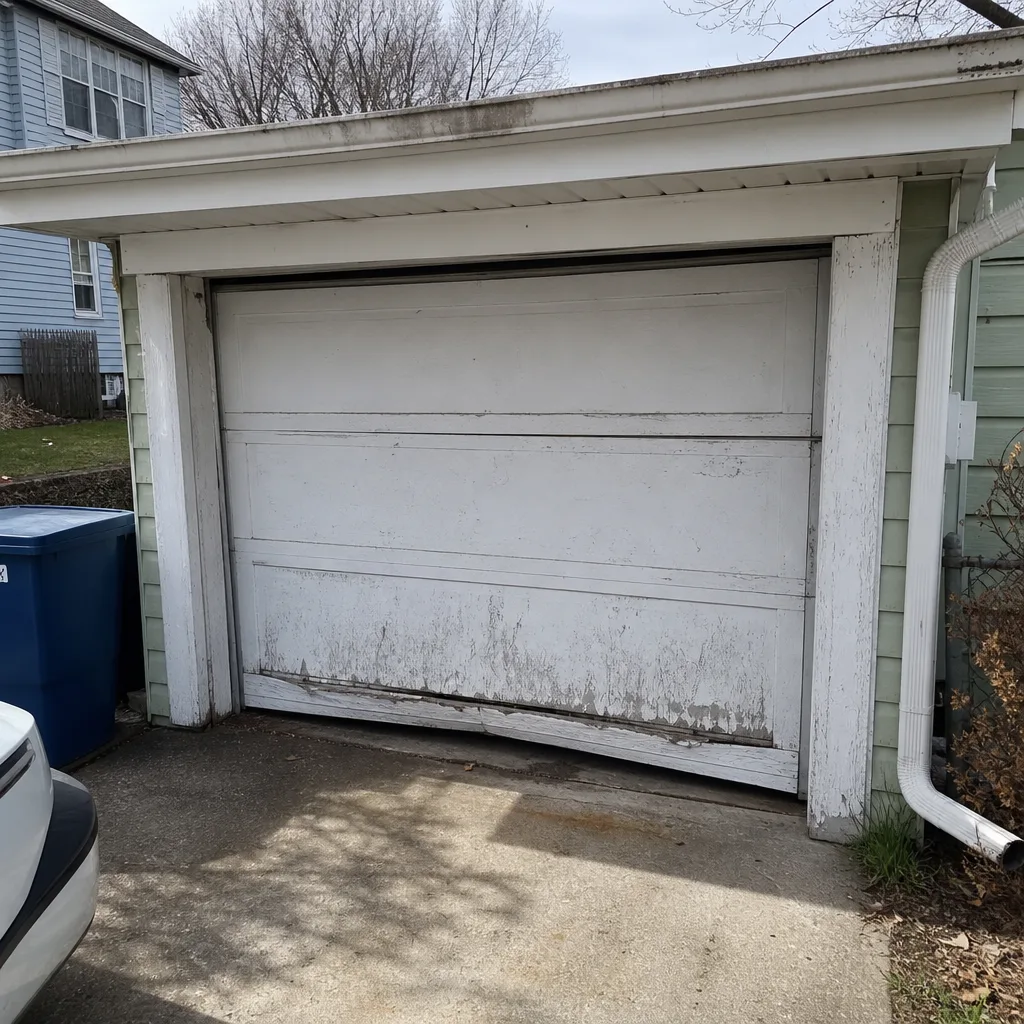 Before
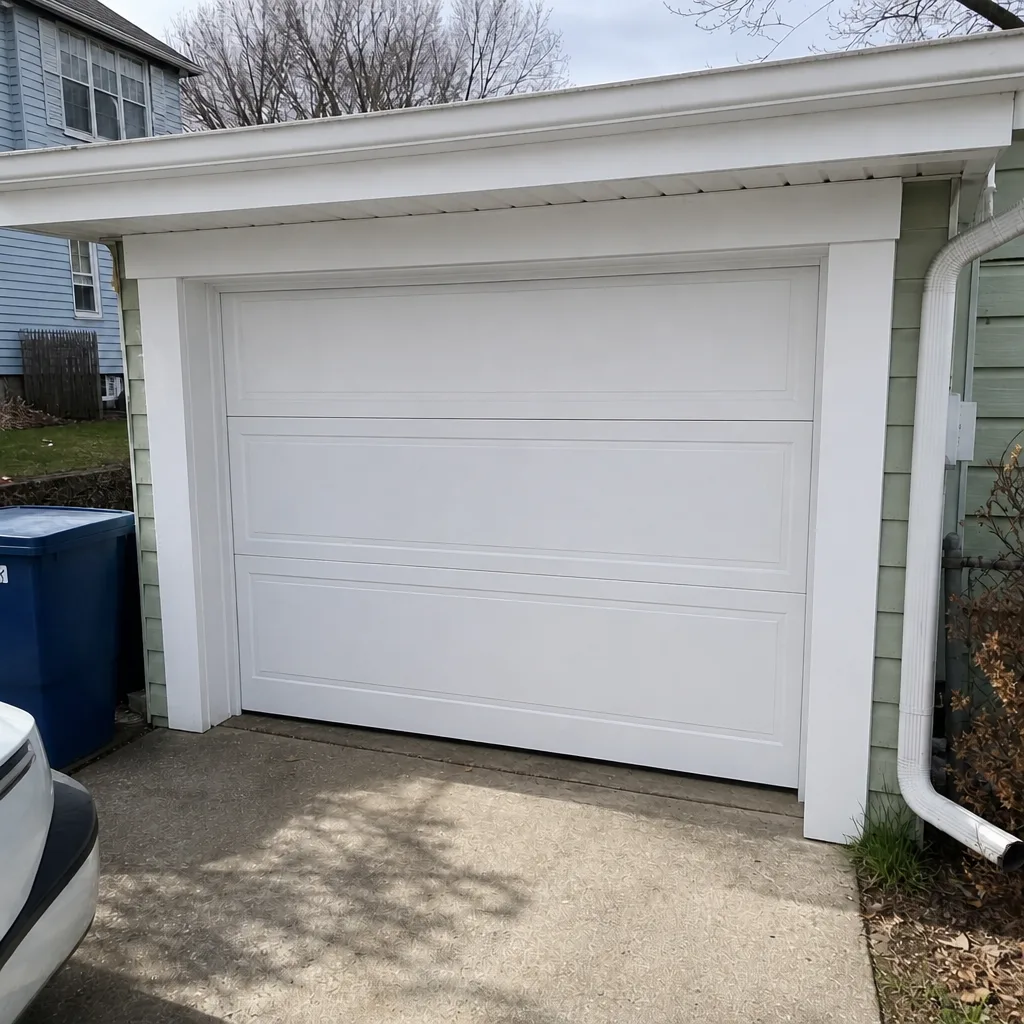 After
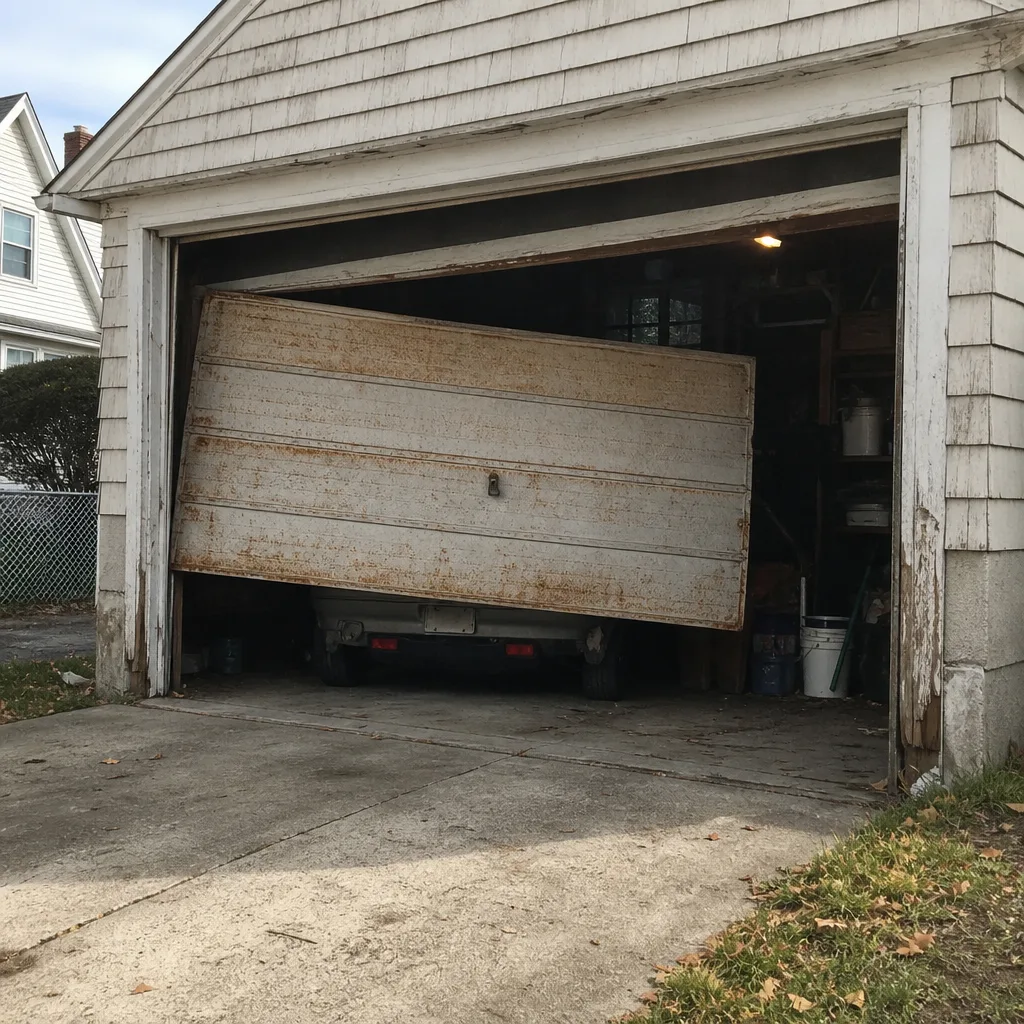 Before
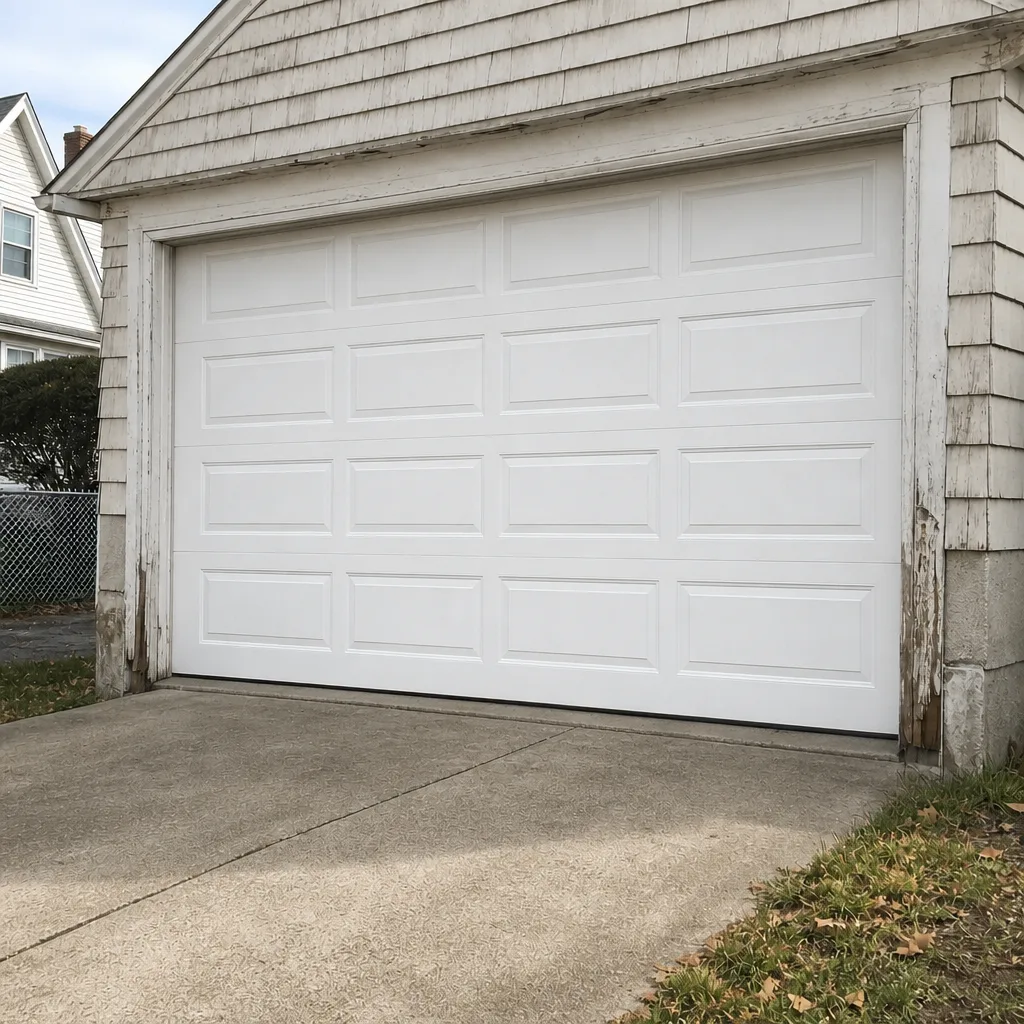 After
When to Call a Professional
Call when any stop-now sign appears, when a warning sign has been present for more than two weeks, or when you can’t tell which bucket a symptom belongs in. Also call if a cable looks frayed, if the door reverses more than once on its own, or if the door doesn’t sit level when closed. These are the cases where a small repair today replaces a larger one later. Lynn Garage Door Repair Co offers free estimates in Lynn. Call (866) 570-7585. We answer 24/7. Fast dispatch from 7am to 7pm, Sunday through Friday.
Frequently Asked Questions
Grinding during operation is the most common early warning sign in Lynn, and it usually points to worn rollers, dry hinges, or a torsion tube that has lost lubrication. It shows up most often in late fall as temperatures drop and grease thickens. If the grinding comes with a crooked door or a popping sound, treat it as urgent. Call (866) 570-7585 for an exact quote; estimates are free.
A spring that is close to failing usually shows one of three signs: a door that has become noticeably harder to lift by hand, a loud pop followed by the door refusing to open fully, or a visible gap in the coil when you look at the spring itself. Any of these means stop using the door. Our technicians have up to 14 years of experience with spring repair, and it’s a job that should never be attempted without proper tools. Call (866) 570-7585.
A crooked close is almost always caused by one spring losing tension faster than the other, or by a cable that has slipped slightly off its drum. Lynn’s freeze-thaw cycle speeds this up, because moisture gets into the hardware, freezes, and forces small shifts in the metal. A crooked door puts extra load on the hinges and the opener. Call (866) 570-7585 for a free estimate.
Costs depend on which component is failing. A hinge and roller tune-up is a modest repair; a full spring replacement is more. We set the price per job by written estimate before any work starts, and the estimate is free. You’ll know the number before anyone touches the door. Call (866) 570-7585.
Lubrication helps with grinding and rattling, but it does not fix a failing spring, a slipping cable, or a door that has come out of alignment. If the only signs are grinding and light rattling, lubrication and a bolt check may be enough. If there’s a crooked close, a popping sound, or a reversal, lubrication masks the symptom without solving it. Call (866) 570-7585 and we’ll tell you honestly which category you’re in.
No. The written estimate sets the final price, and we quote before any work begins. If something unexpected turns up during the job, we stop and talk it through before proceeding. That’s the standard for every job we take on in Lynn. Call (866) 570-7585 for a free estimate.
Twice a year: once in October before the first hard freeze and once in April after the thaw. That schedule catches most of the wear that Lynn’s climate causes, and a visual check takes about twenty minutes. If you’re not sure what to look for, our team can walk you through it. Call (866) 570-7585.
The Bottom Line
The signs that your garage door is about to fail are almost always visible or audible weeks before it does. The skill is knowing which sound means what, how to read the gap at the bottom of the door, and when opener behavior is a diagnosis rather than a nuisance. In Lynn, add the freeze-thaw layer: rust streaks, white mineral deposits, and swollen bottom seals are climate-driven warning signs that show up faster than they do in milder regions. When in doubt, call a specialist who works on your specific brand. Lynn Garage Door Repair Co offers free estimates and can be reached at (866) 570-7585. Our technicians have up to 14 years of experience, and garage doors are all we do.
Written by the team at Lynn Garage Door Repair Co.