
Last updated November 22, 2026
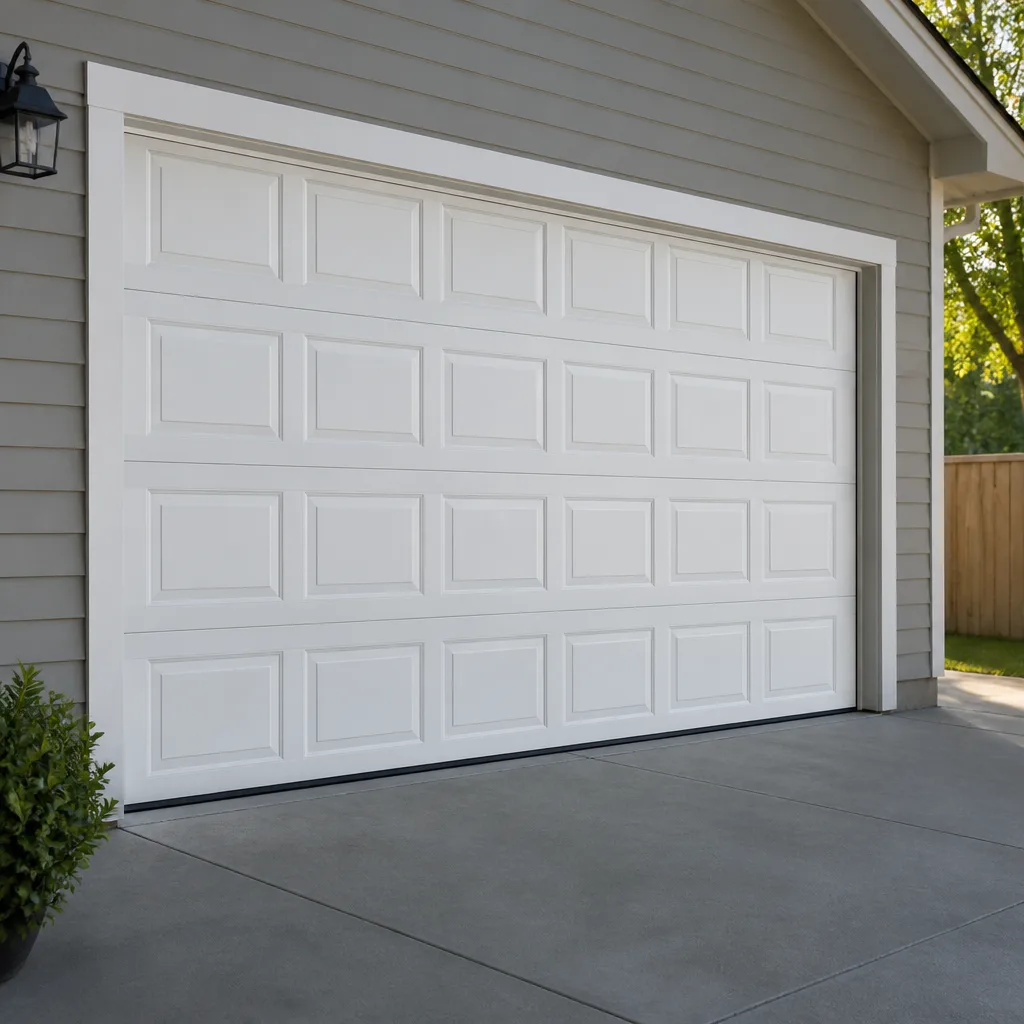 Raised-panel steel
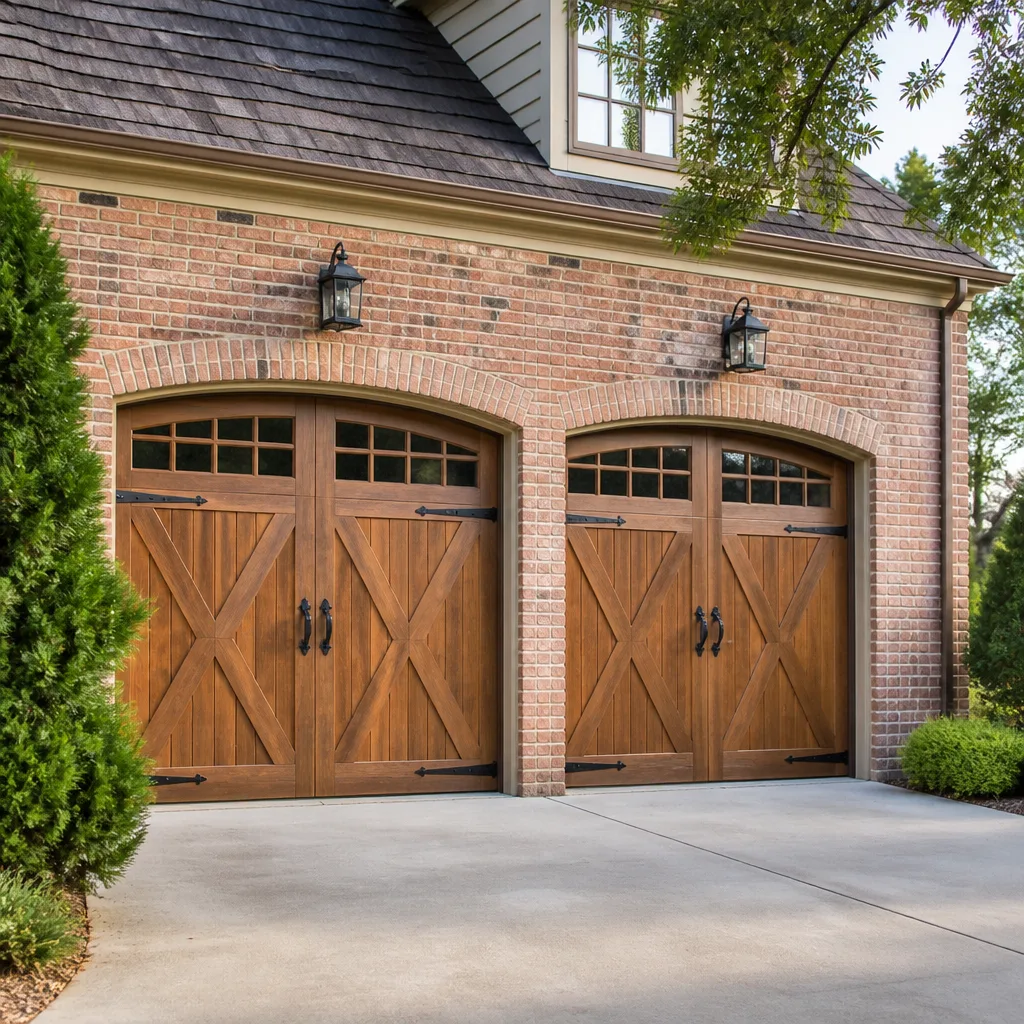 Carriage house
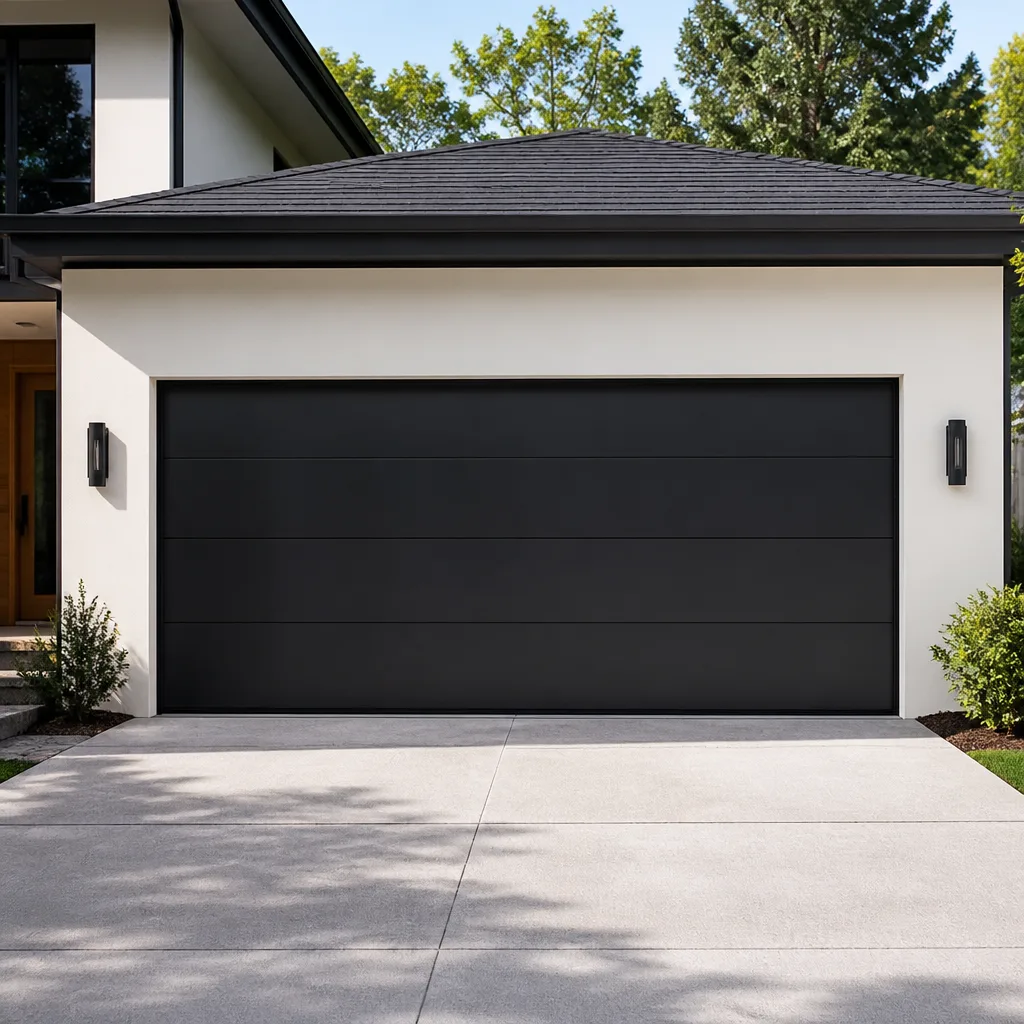 Modern flush
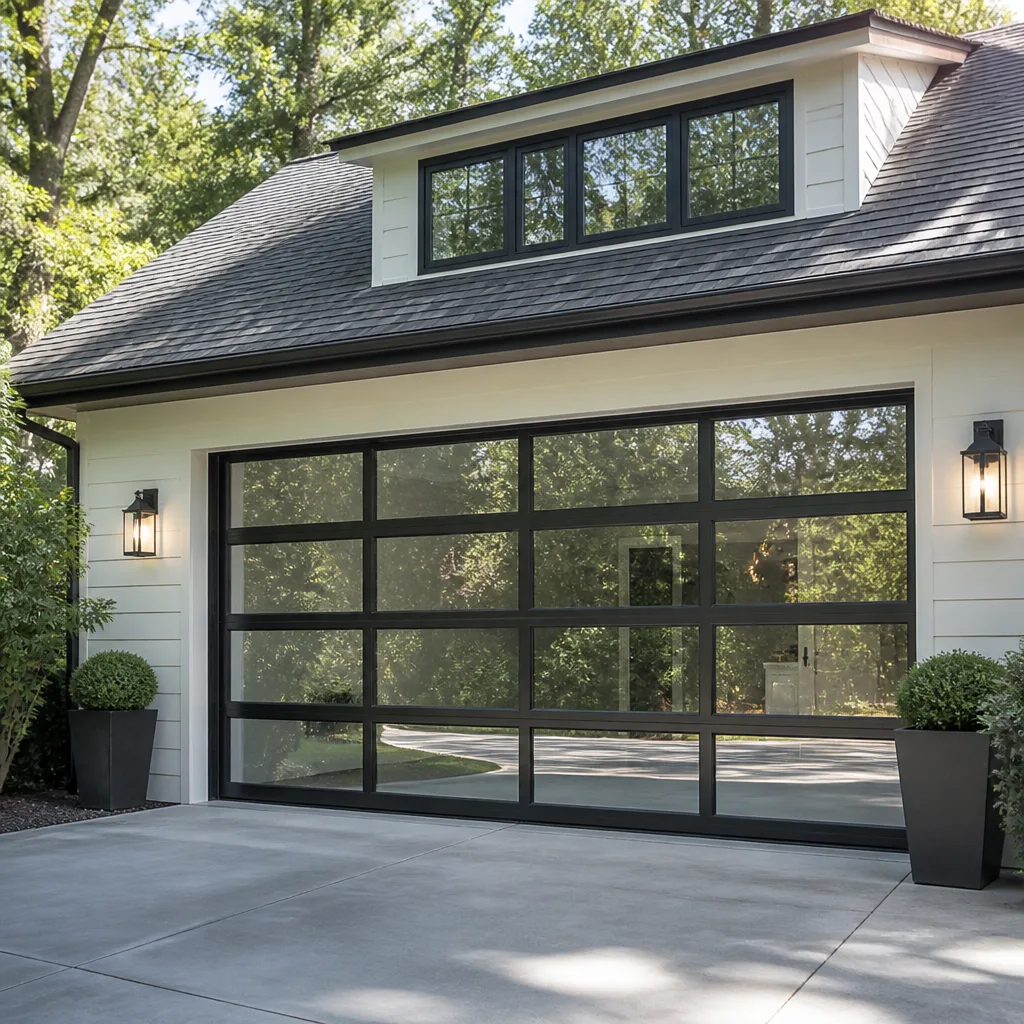 Full-view glass
 LiftMaster openers
 Chamberlain openers
Full 25-point door and opener safety check with every visit - springs, cables, rollers, tracks, and your LiftMaster or Chamberlain opener included
You get a price before we start. It does not change when the pro arrives.
Get your free estimateSeasonal Garage Door Care for Lynn: Year-Round Homeowner’s Guide
The garage door failures that happen in January were almost always set in motion in October. That’s the part most homeowners miss: a garage door doesn’t break because of one cold morning. It breaks because the lubrication was never refreshed before the freeze, the bottom seal was already cracked, and the opener was quietly working harder every week to lift a door that wanted to stay down. A fall check that takes an afternoon is worth far more than a mid-winter emergency call. This guide walks through Lynn’s four-season stress pattern, season by season, and shows you the one task each season that prevents most emergency calls.
Quick Answer
In Lynn, garage door care follows four transition points. In fall, lubricate moving parts with cold-rated grease, replace a cracked bottom seal before the first freeze, and test the opener’s battery backup. In winter, watch for an opener straining against cold-stiffened springs. In spring, audit hardware for corrosion from road salt and standing moisture. In summer, check how thermal expansion on a sun-facing steel door is affecting your limit switches. Handle each transition and you avoid most of the breakdowns that turn into emergency calls.
Styles & brands we work with
- Raised-panel steel
- Carriage house
- Modern flush
- Full-view glass
- LiftMaster openers
- Chamberlain openers
Table of Contents
- Fall Prep: The Checklist That Pays for Itself
- Winter: Cold, Spring Tension, and Opener Strain
- Spring: The Post-Winter Corrosion Audit
- Summer: Heat, Thermal Expansion, and Limit Switches
- The One Task per Season That Prevents Most Emergency Calls
- What Brand Familiarity Means for Seasonal Care
- A Simple Year-Round Maintenance Calendar
- Safety First: What You Should Never Adjust Yourself
Fall Prep: The Checklist That Pays for Itself
Fall is the season that decides how your garage door spends the winter. Lynn sits close enough to the water that late-fall moisture hangs in the air longer than it does inland, and that moisture finds every worn seal and dry hinge pin before the cold locks it in. A door that got through last winter without trouble can still fail this one if the prep is skipped. Here’s the pre-winter checklist we walk homeowners through.
- Lubricate with cold-rated grease, not thin oil. Hinges, rollers, and the tracks get a light coating of a lubricant that stays put when temperatures drop. Thin oil runs off in the cold and leaves metal on metal by January. Avoid greasing the tracks themselves too heavily; a light film is enough.
- Replace a cracked or flattened bottom seal before the freeze. The bottom seal is the rubber strip that meets the floor. Once it hardens and splits, cold air and moisture get under the door, and the seal becomes harder to replace cleanly once the floor is cold and damp. Do this one in fall, not in February.
- Test the opener’s battery backup. If your opener has a battery backup, pull the power to simulate an outage and confirm the door still operates. A dead backup battery won’t announce itself until you need it.
- Check the balance of the door by hand. Disconnect the opener and lift the door halfway. It should stay put. If it drifts down, the springs are losing tension and need attention before the cold makes it worse.
- Clear and inspect the tracks. Debris, leaves, and grit collect at the bottom curve. Wipe them out and check that the vertical and horizontal tracks line up.
What makes fall worth three times more than a mid-winter emergency call is simple: everything on that list is a preventive task done on your schedule, in mild weather, before a small problem becomes a door that won’t open on the coldest morning of the year.
Winter: Cold, Spring Tension, and Opener Strain
Winter is when Lynn garage doors earn their keep, and it’s also when the season’s stress pattern shows up. When temperatures drop below 20°F, the steel in torsion and extension springs contracts, and the springs lose a measurable amount of their lifting force. The door itself gets heavier as the lubricant thickens. The opener, which was sized for a door at room temperature, now has to work noticeably harder to do the same job.
That extra load is where problems surface. A torsion spring that was already near the end of its cycle can snap on the first hard freeze. An opener that was marginal in October starts straining in January. And a door that closes unevenly in cold weather is often telling you the springs are no longer matched to the door’s weight at that temperature.
Signs your opener is compensating unsafely
- The door moves in jerks or pauses partway up, especially on the first cycle of a cold morning.
- The opener motor sounds louder or runs longer than it used to before the door reaches the top.
- The door reverses partway down on its own, which can mean the force settings are too high or the safety sensors are misreading.
- The light flickers or the opener cuts out under load, a sign the motor is drawing more current to lift a stiff door.
- The door sags or droops at one corner when fully open.
If you notice any of these, don’t force the door. Call garage door opener repair and have the opener, springs, and door balance checked together, because the strain is usually a symptom of a door that’s harder to lift, not a failing motor on its own. Leave the torsion spring work to trained hands; those springs store enormous energy even when the door is down, and adjusting them without the right tools is genuinely dangerous.
Spring: The Post-Winter Corrosion Audit
By the time the snow melts, your garage door has spent months in a cycle of road salt, moisture, and freeze-thaw. The salt that gets tracked onto the floor and kicked up onto the bottom panels and hardware doesn’t just wash away. It sits in the seams, the hinge pins, the roller stems, and the bottom seal, and over a full winter it starts to pit and rust the metal. Spring is when you audit the damage before it spreads.
Post-winter corrosion checklist
- Inspect the bottom panels and bottom seal. This is where salt spray and splash hit hardest. Look for rust bloom, bubbling paint, and a seal that has gone hard or torn.
- Check hinge pins and roller stems for rust. A rusted hinge pin binds, and a binding hinge forces the opener to work harder. Clean and re-lubricate, or replace the hinge if it’s pitted.
- Look at the torsion bar and spring coils. Light surface rust on the coils is common and manageable; deep pitting or flaking is a reason to have the springs inspected by a professional.
- Wipe down and dry the tracks. Salt-laden grit that collected over winter abrades the rollers. Clean the tracks and check the rollers for flat spots.
- Wash the door panels and touch up paint chips. A small paint chip is where rust starts. Touch-up in spring stops it before it reaches the metal underneath.
- Test the balance again. After a winter of temperature shifts, re-check that the door stays where you put it when lifted halfway.
If the corrosion has reached the springs or the hinges are seized, that’s a job for garage door repair rather than a can of spray lubricant. A door with a rusted hinge that won’t release can put uneven strain on the opener and the panels.
Summer: Heat, Thermal Expansion, and Limit Switches
Summer brings a different stress pattern. On a steel door that faces the sun, the metal expands in the heat and contracts again at night, and that constant expansion and contraction works on the panels and the track alignment. In Lynn, where a lot of garage doors face west or south and catch the full afternoon sun, this can be more pronounced than homeowners expect. A door that runs clean in March can start stopping just short of the floor, or reversing before it closes, by July.
That symptom is almost always the limit switch or the travel setting on the opener. The door panel has expanded, so the opener’s “fully closed” position no longer matches reality, and the safety system reads the difference as an obstruction. Before you touch the limits yourself, watch the door’s travel on a normal cycle and note exactly where it stops or reverses. That observation is what a technician needs to set the travel correctly.
- Adjust the limit switches accordingly. If the door stops short of the floor in the heat and seals in the cool of the morning, the closed limit needs a slight adjustment. Careful: the limits interact with the force settings, and moving one without the other can leave the door closing with too much force.
- Keep the sun side of the door clean. A faded or chalky finish on a sun-facing door is cosmetic, but a chalky surface holds dust that traps heat.
- Check the weather seal again. Heat softens the rubber; a seal that was fine in spring can sag and drag in July.
- Watch for rattling panels. Loose panel fasteners show up as rattles on a hot door. A quick check with the door down and up catches most of them.
If the door reverses on its own even after you clean the safety sensors, call us before you turn the force settings up to compensate. Forcing a door past a safety reversal is the wrong fix, and it’s the kind of shortcut that causes a real accident down the road.
The One Task per Season That Prevents Most Emergency Calls
If you only do one thing per season, do these. Each one targets the single failure point that causes the most emergency calls that season, and each is specific to that season’s stress on a Lynn garage door.
- Fall: test the balance and replace a failing bottom seal. The balance test tells you whether the springs are still matched to the door’s weight before the cold adds load. The bottom seal keeps moisture and cold out of the hardware. Together they prevent the two winter failures we hear about most: a spring that snaps on a cold morning and a door that won’t seal against the weather.
- Winter: check the opener’s force response by hand. Before you close the door each week, stand in the door’s path and let it meet your hand (do this with the door near the bottom, not at the top, and never with your body under a moving door). If the door doesn’t reverse readily, the force setting is too high. Correcting it, or having it corrected, prevents the jammed-door call.
- Spring: clean and re-lubricate the hinges and rollers. A single afternoon with a rag and cold-rated lubricant removes the salt grit and rust that bind hinges and force the opener to work harder all summer. This one task stops more opener fatigue than any other spring action.
- Summer: verify the safety reversal and limits. Once the heat has settled in, run the safety reversal test (place a small object in the door’s path and confirm the door reverses) and watch the travel. A limit or sensor issue caught in summer is a small adjustment; caught in winter, it’s a door that won’t close in the cold.
We’ve watched this pattern for a long time, and it holds: the homeowner who does one focused task per season spends far less over five years than the one who calls only when something breaks. That’s not a sales pitch, it’s just how preventive maintenance works on a mechanical system that runs every day.
What Brand Familiarity Means for Seasonal Care
A garage door system is a set of parts from a handful of manufacturers, and each brand has its own design details, service intervals, and quirks. Seasonal care goes better when whoever is looking at your door knows the brand that’s already there. At Lynn Garage Door Repair Co we work on the brands you’re most likely to have: LiftMaster, Chamberlain, Genie, Clopay, Amarr, Wayne Dalton, Craftsman, and Raynor. That covers the vast majority of doors and openers installed in homes around Lynn.
Why it matters season to season: a Genie opener’s force and travel settings don’t adjust the same way a LiftMaster’s do, and the spring and hinge hardware on a Clopay door isn’t identical to the same size door from Wayne Dalton. When we know the brand, the seasonal check becomes a targeted inspection rather than a guess. We know which hinges on a given door line are prone to binding after a salty winter, and which openers need their battery backup checked more carefully. If you’re not sure what you have, the label on the opener housing and the door’s hardware usually tell the story.
If you’re planning a new door and thinking about the seasonal performance you want, familiarity with the Clopay and Amarr product lines helps both repair and installation guidance. We can talk through which finishes hold up best to a sun-facing exposure and which hardware needs the least seasonal attention over the life of the door.
A Simple Year-Round Maintenance Calendar
Here’s the calendar we suggest to homeowners in Lynn and the surrounding neighborhoods. It’s not a lot of work when you spread it across the year, and it keeps the big-ticket failures from landing on the worst possible day.
- Early fall (before the first freeze): lubricate hinges, rollers, and tracks with cold-rated grease; replace a worn bottom seal; test the opener’s battery backup; run the balance test.
- Late fall: final track clean-out, a quick visual check of the springs, and a test of the safety reversal. If you notice anything that worries you, call for a free estimate before winter.
- Mid-winter: a weekly force-response check by hand, and a listen for new noises on cold mornings. If the door strains, stop forcing it.
- Early spring: the corrosion audit, wash and touch-up paint chips, clean and re-lubricate hinges and rollers.
- Late spring: balance re-check and a look at the rollers for flat spots.
- Early summer: confirm limits and safety reversal as the heat arrives; check the weather seal for heat softening.
- Late summer: a clean of the sun-facing door and a rattle check on the panels before fall prep starts again.
If the door has been giving you small signs all year, we can pull the whole system into one visit. Our technicians have up to 14 years of experience, and they can check the opener, springs, panels, and hardware together so you’re not chasing one symptom at a time. For anything pressing, we offer emergency service when a door is stuck or won’t close. Lynn Garage Door Repair Co handles the full system under one roof, so you’re not juggling contractors.
Safety First: What You Should Never Adjust Yourself
Some seasonal tasks are safe for a homeowner with a ladder and a rag. Others are not, and it’s worth being blunt about which is which.
Garage door torsion and extension springs, the cables, and the bottom bracket carry enormous stored energy. There’s no safe way to adjust or replace a spring without the right tools and training; the springs can release suddenly even when the door is fully down. This is why spring replacement is a core specialty here, and a job we want done by trained hands. The same goes for any work inside or around an opener’s high-voltage wiring, and for balancing a door whose springs are under tension.
The safe homeowner tasks are the ones on a ladder at the front of the system: lubricating hinges and rollers, wiping the tracks, washing and touching up the panels, cleaning the safety sensors, testing the battery backup, and running the safety reversal check. If a task requires tools on the torsion bar or the spring system, stop and call us. A trained technician will take the weight off the door properly, inspect the springs, and set everything back where it belongs. Getting this one right is the whole reason a seasonal guide exists.
Common Mistakes to Avoid
- Using thin oil or WD-40 on the hinges and rollers in fall. It runs off in the cold and leaves the metal dry by mid-winter. Use a cold-rated grease that stays put. The difference over one Lynn winter is real.
- Skipping the bottom seal until it’s already torn. A cracked seal lets cold and moisture get under the door and into the hardware. Replacing it before the freeze is easier and cheaper than doing it in February.
- Turning up the opener’s force setting to fix a stiff door. The force setting isn’t a workaround for a door that’s harder to lift; raising it masks a spring or balance problem and makes the door less safe. If the door is straining, find out why.
- Ignoring corrosion on the bottom panels through spring. Road salt and moisture start rust in the seams and bottom panels over a full winter. A quick wash and touch-up in spring stops it from reaching the metal.
- Adjusting the limit switches without watching the door’s travel. The limits interact with the force and safety settings. Note where the door stops or reverses before you move anything, so the adjustment is the right one.
- Forgetting the opener’s battery backup. A dead backup battery doesn’t show up until the power goes out. Test it in fall when it’s easy to replace.
- Testing the safety reversal with your body in the door path. Use a small object, not a hand or foot. A door that doesn’t reverse readily has a sensor or force problem that needs attention.
See the difference
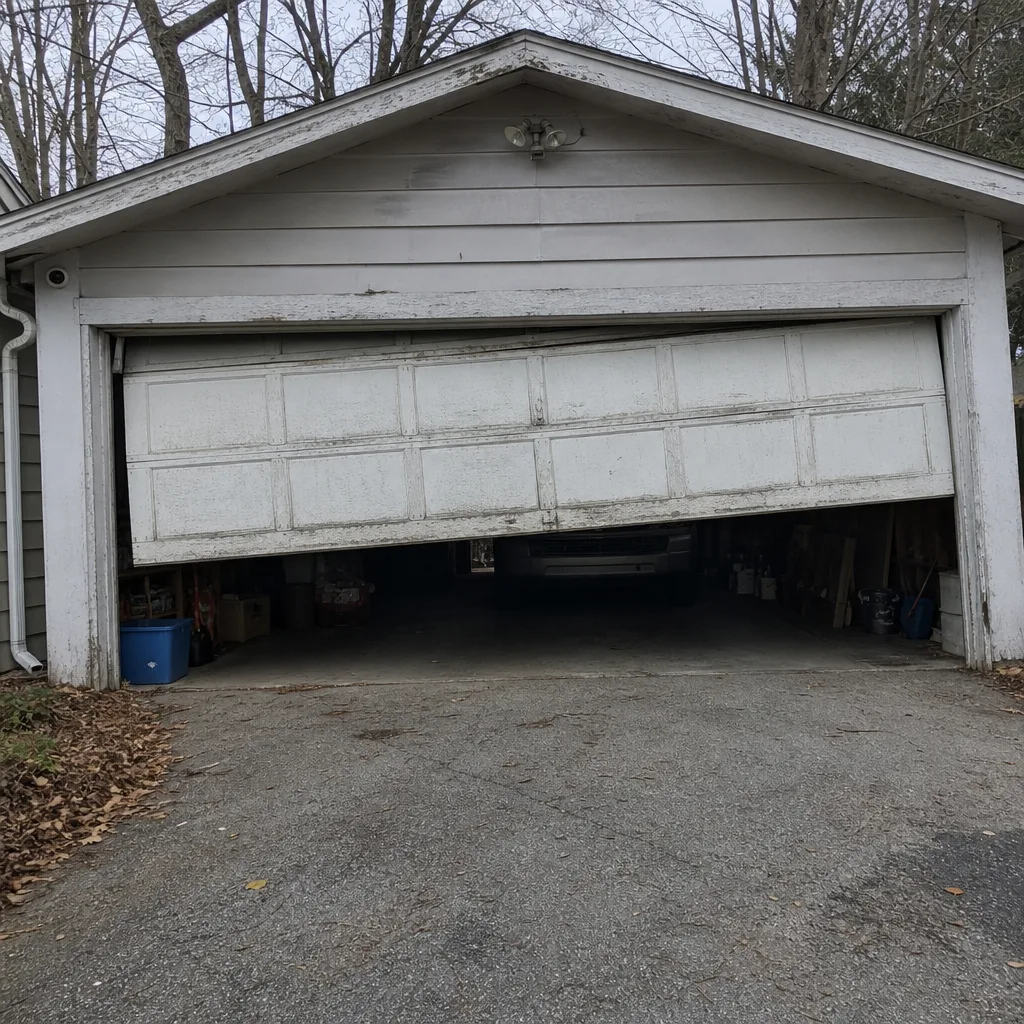 Before
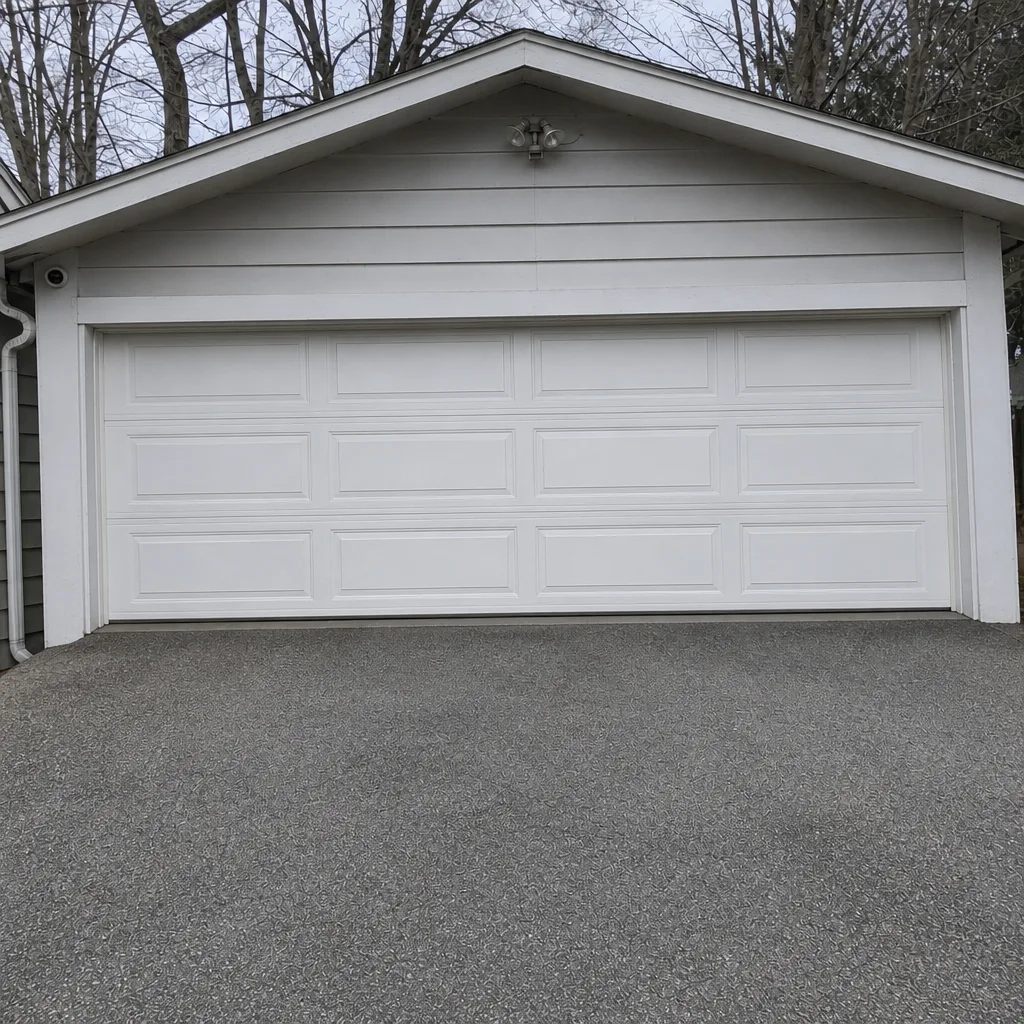 After
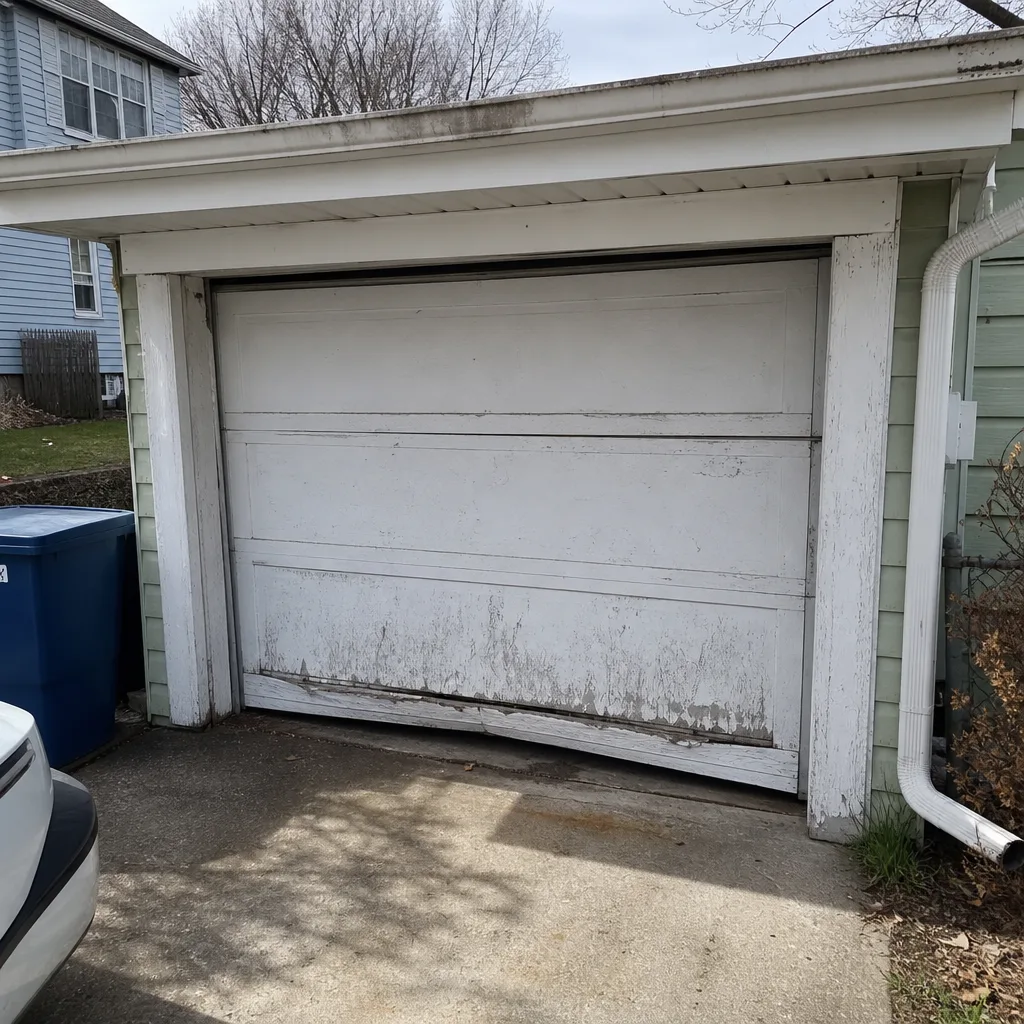 Before
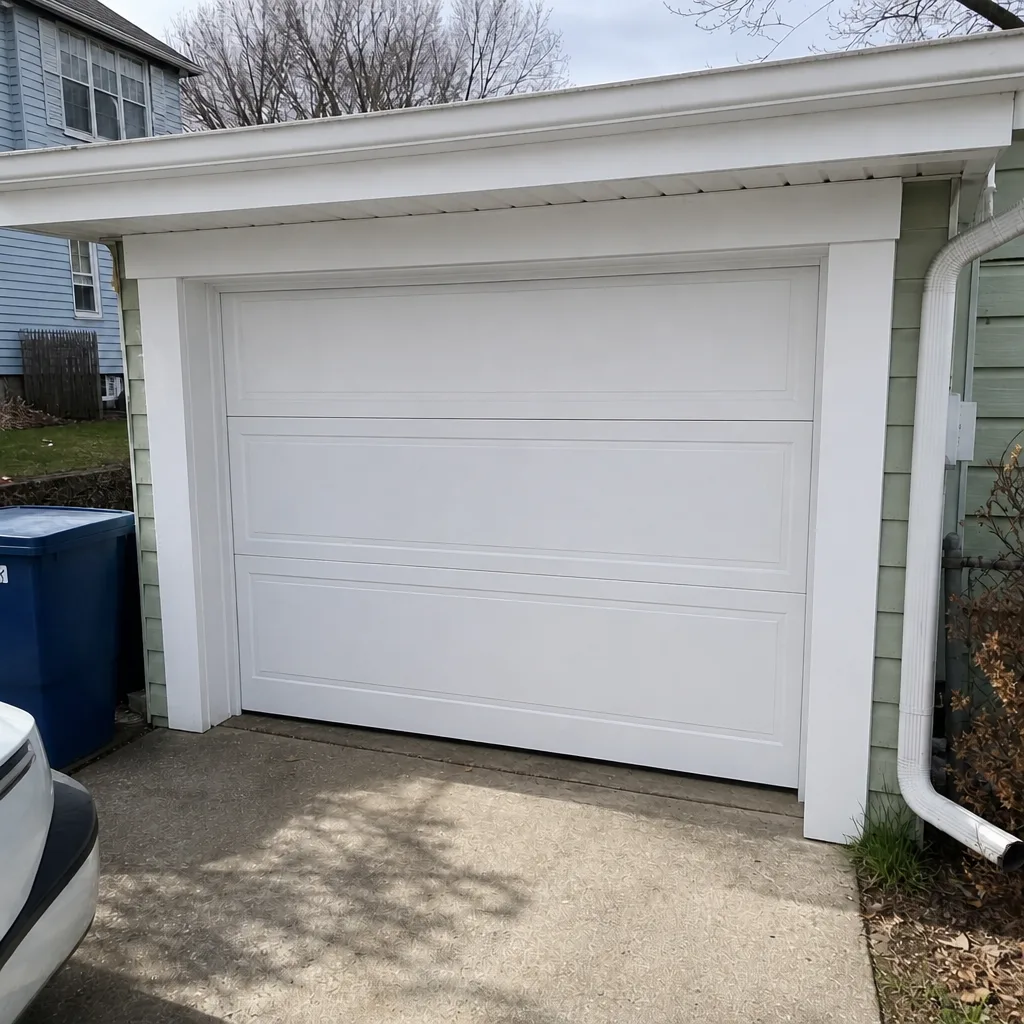 After
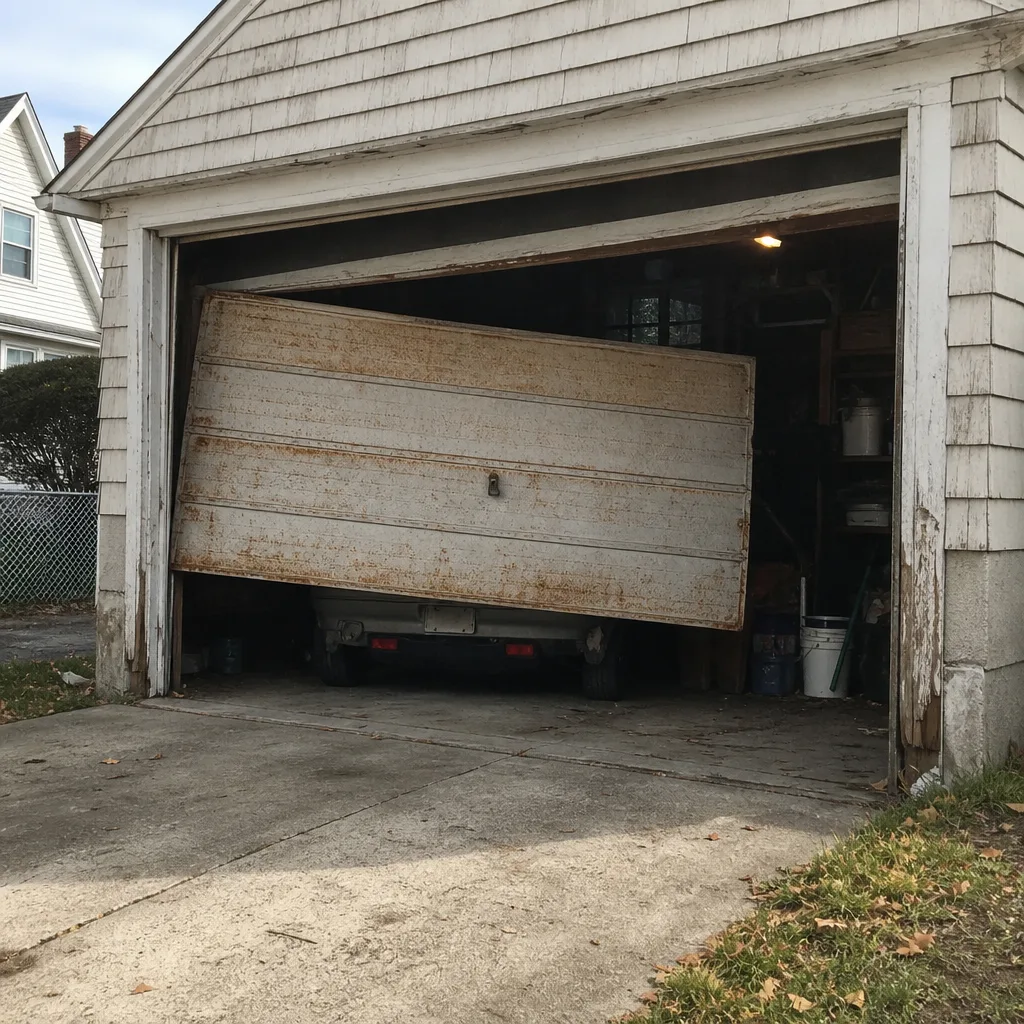 Before
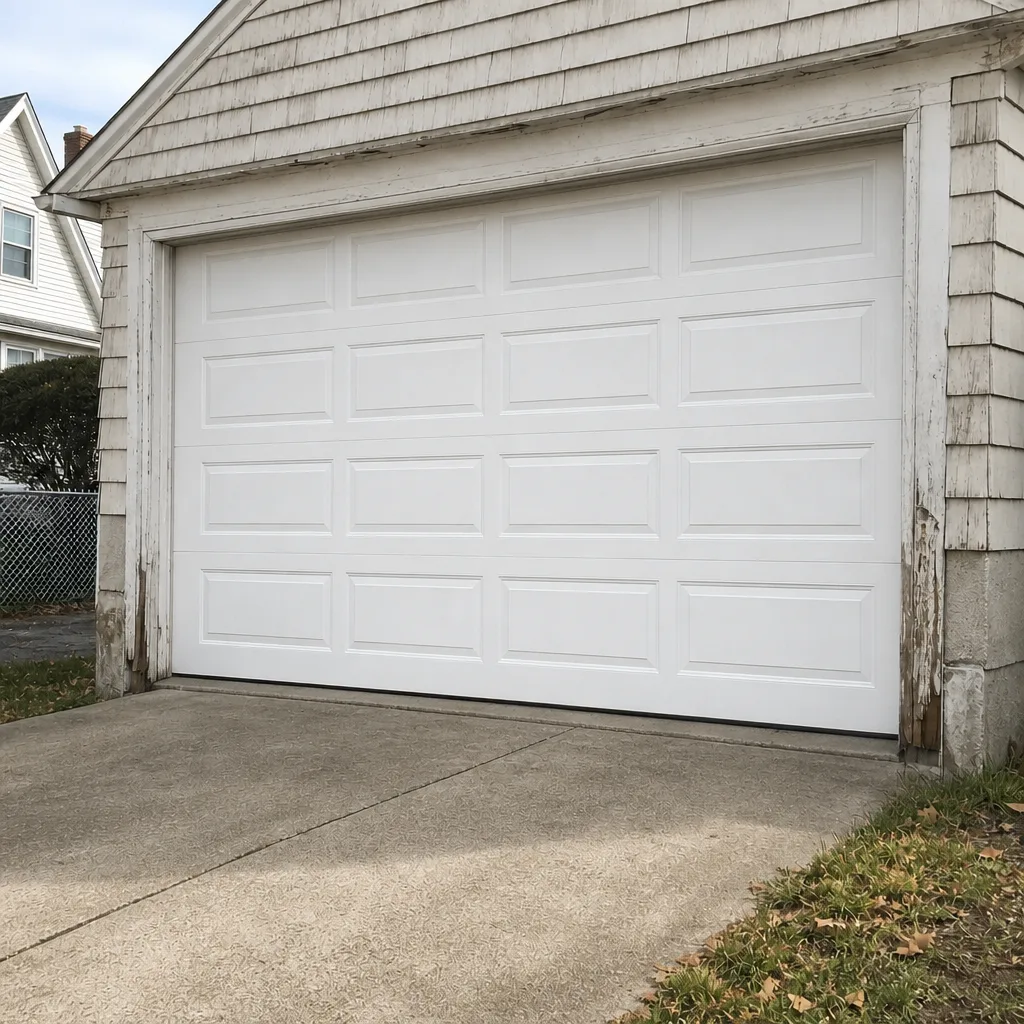 After
When to Call a Professional
Some issues are beyond the seasonal checklist. Call us when a torsion or extension spring has snapped, when the door is visibly sagging or off its track, when the opener strains, jerks, or reverses on its own, when a panel is bent or a cable has come loose, or when the door simply won’t close. These are the situations where the door’s stored energy and weight make a wrong move dangerous, and where a trained technician saves you from turning a small repair into a bigger one. A door that has been straining all winter but hasn’t failed yet is also worth a look before the next cold snap. Lynn Garage Door Repair Co offers free estimates in Lynn; call (866) 570-7585. We answer 24/7, with fast dispatch from 7am to 7pm.
Frequently Asked Questions
Four tasks, one per season. In fall, lubricate with cold-rated grease, replace a failing bottom seal, and test the opener battery backup. In winter, watch for a straining opener. In spring, audit for corrosion from road salt and moisture. In summer, check that the limit switches and safety reversal still work as the door expands in the heat. Call (866) 570-7585 for a free estimate if anything looks off.
Cold weather stiffens the lubricant and contracts the springs, so the door gets heavier and the opener has to work harder to lift it. Below about 20°F the effect is noticeable, and a door that was marginal in fall can start jerking or pausing. If it happens, don’t force it. Have the springs and opener balance checked, and call (866) 570-7585 for a free estimate.
Keep moisture and road salt off the hardware and re-lubricate before the cold sets in. In fall, clean the tracks and hinges and apply a cold-rated grease, and inspect the bottom seal for cracks that let salt and moisture through. In spring, wash the panels, touch up paint chips, and clean the hinge pins and roller stems. If corrosion has reached the springs, call (866) 570-7585 for an inspection.
The limit switches are among the safer adjustments, but they interact with the force and safety settings, so it’s easy to get them wrong. If the door stops short of the floor in summer heat or reverses on its own, note where it stops before you change anything, and consider having it set for you. Call (866) 570-7585 for a free estimate.
Seasonal maintenance costs far less over time than reactive repairs, because each transition check catches small problems before they turn into emergency calls. The fall balance test and the spring corrosion audit are the two that prevent the most calls in Lynn. A free estimate on a preventive visit today beats a stuck door on the coldest morning. Call (866) 570-7585.
We work on the brands most common in Lynn homes: LiftMaster, Chamberlain, Genie, Clopay, Amarr, Wayne Dalton, Craftsman, and Raynor. Knowing the brand lets us read the seasonal signs accurately instead of guessing. If you’re not sure what you have, tell us the make and model and we’ll take it from there. Call (866) 570-7585 for a free estimate.
The Bottom Line
Seasonal garage door care in Lynn is a rhythm, not a chore list. The failures that happen in the coldest weeks are almost always set up months earlier, which is why one focused task per season beats a pile of emergency calls. Fall prep with cold-rated grease and a solid bottom seal, a winter watch on a straining opener, a spring corrosion audit, and a summer check of the limits and safety reversal will keep most doors out of trouble. Our technicians have up to 14 years of experience across the major brands, and when a door needs garage door spring repair, we treat it as the safety-critical job it is. Call (866) 570-7585 for a free estimate. We answer 24/7, with fast dispatch from 7am to 7pm, Sunday through Friday.
Written by the team at Lynn Garage Door Repair Co.