
Last updated November 22, 2026
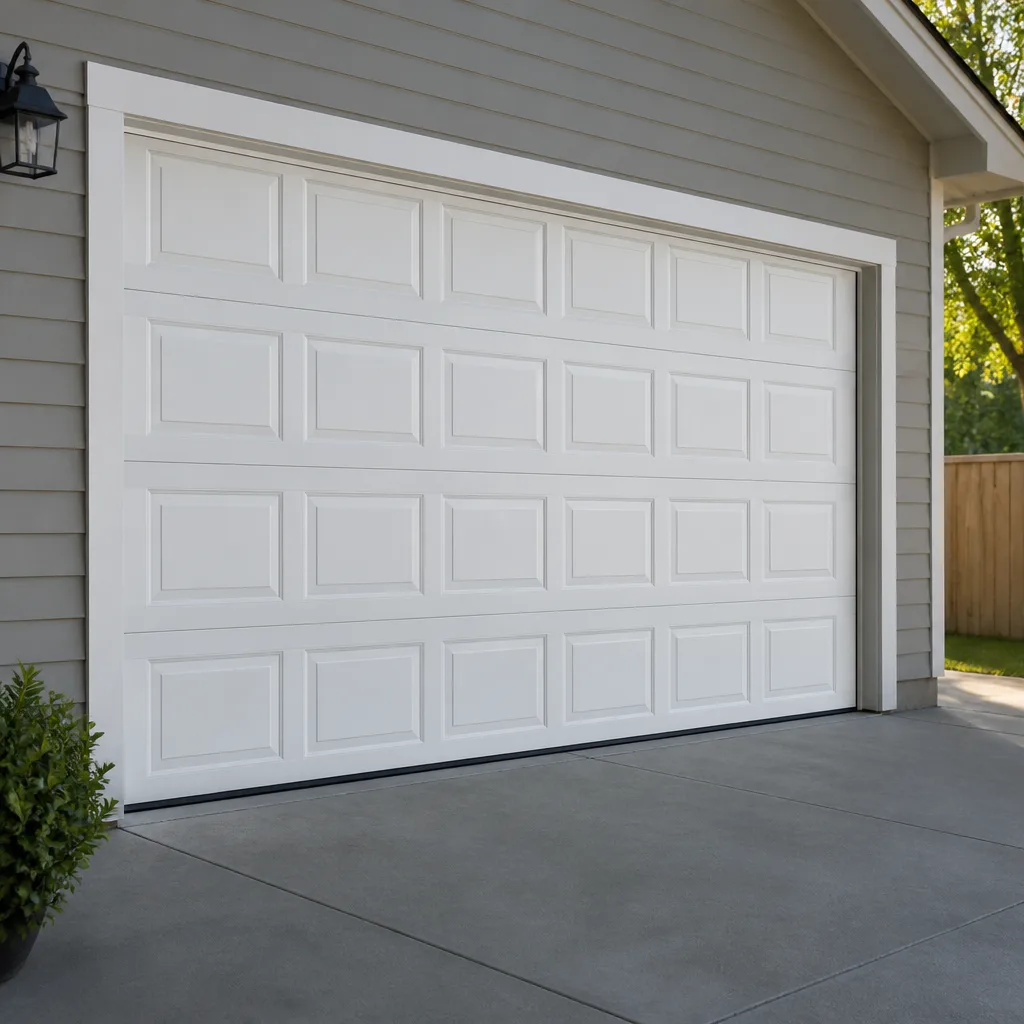 Raised-panel steel
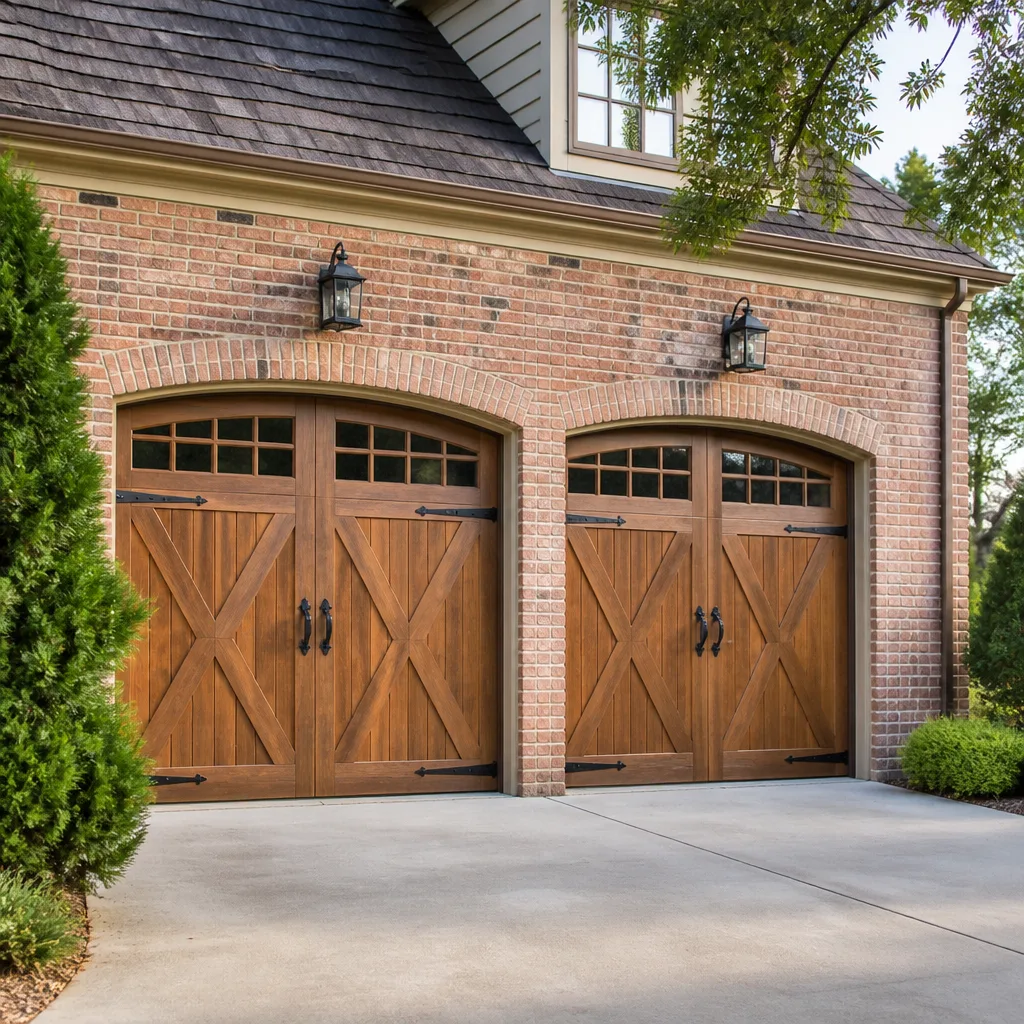 Carriage house
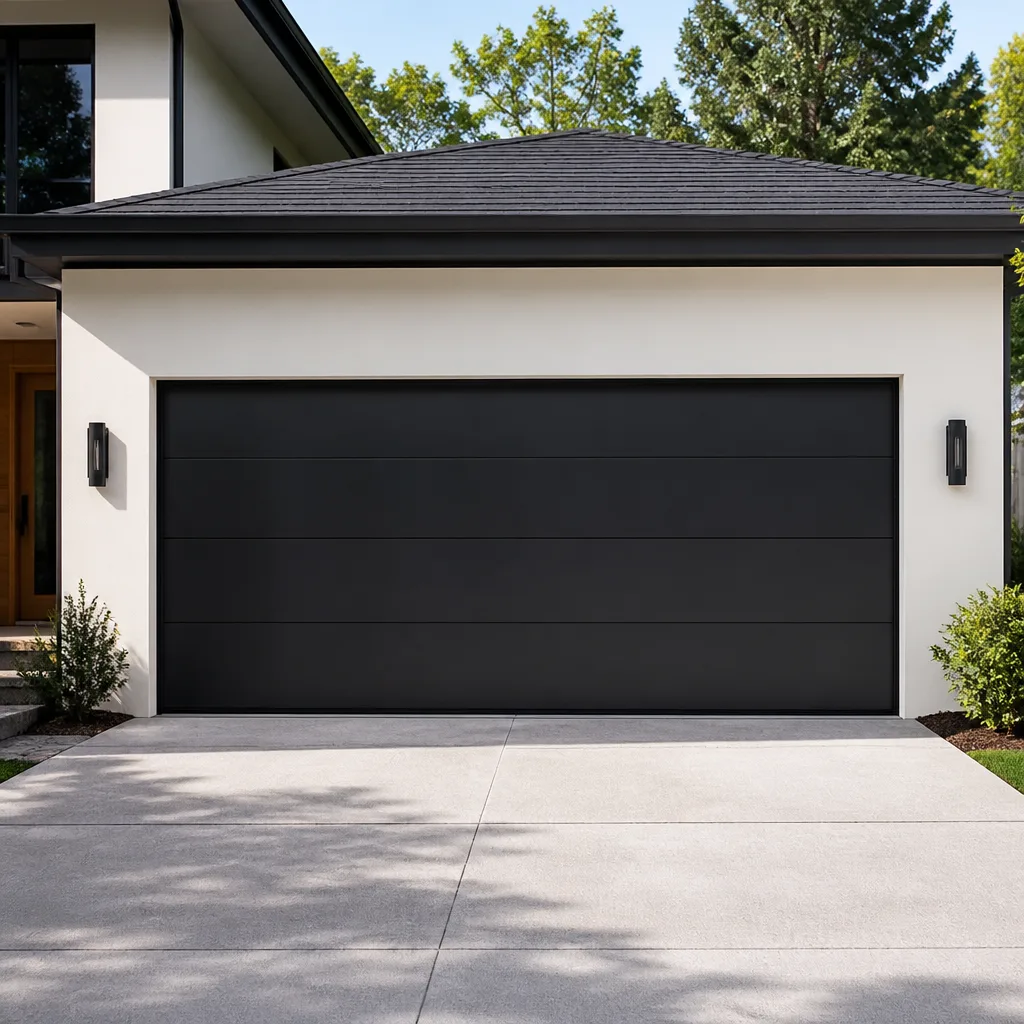 Modern flush
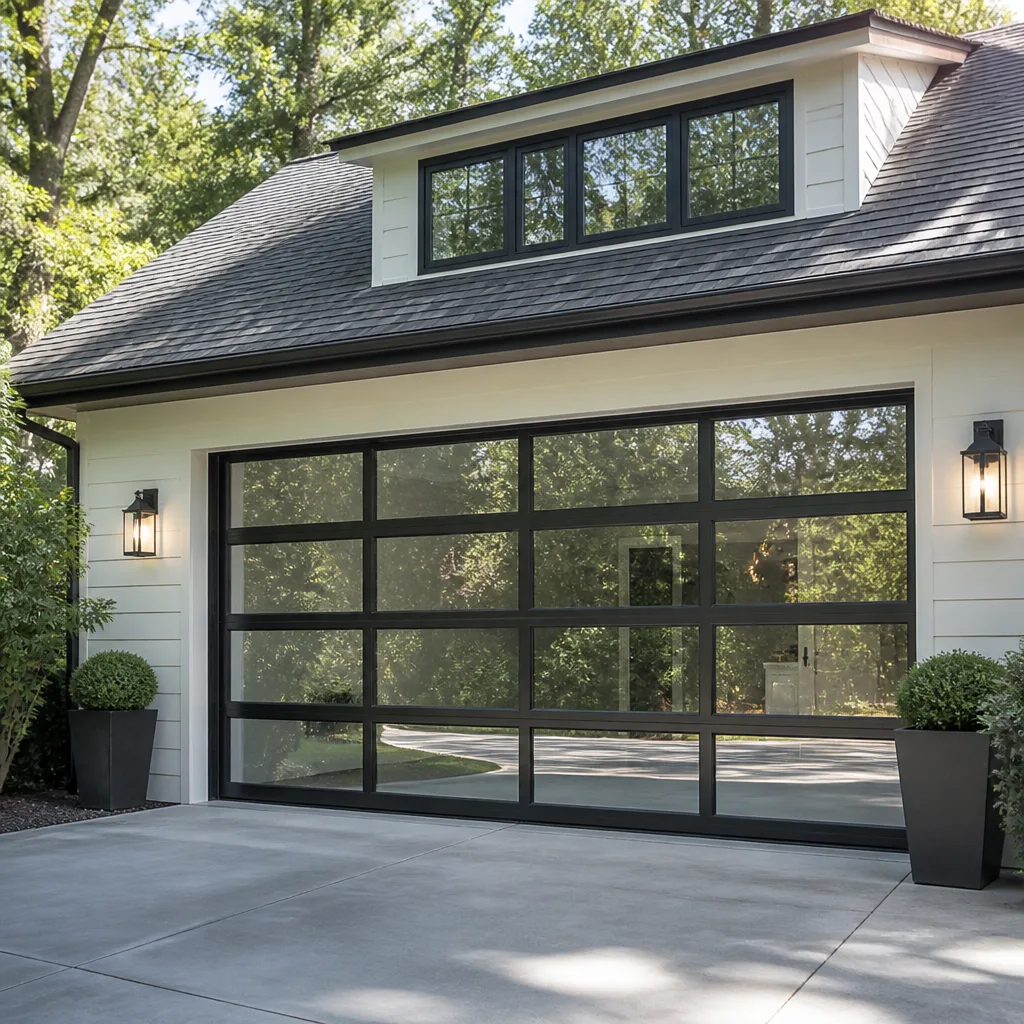 Full-view glass
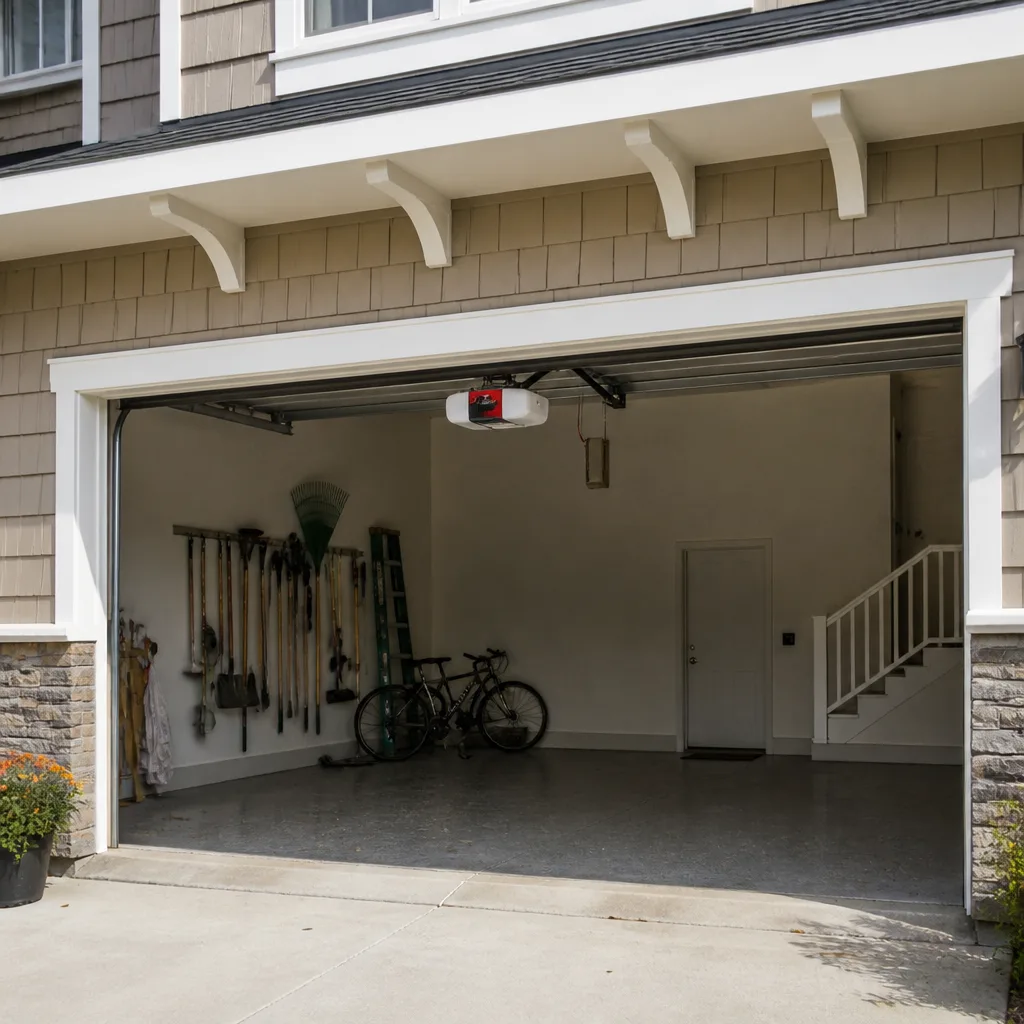 LiftMaster openers
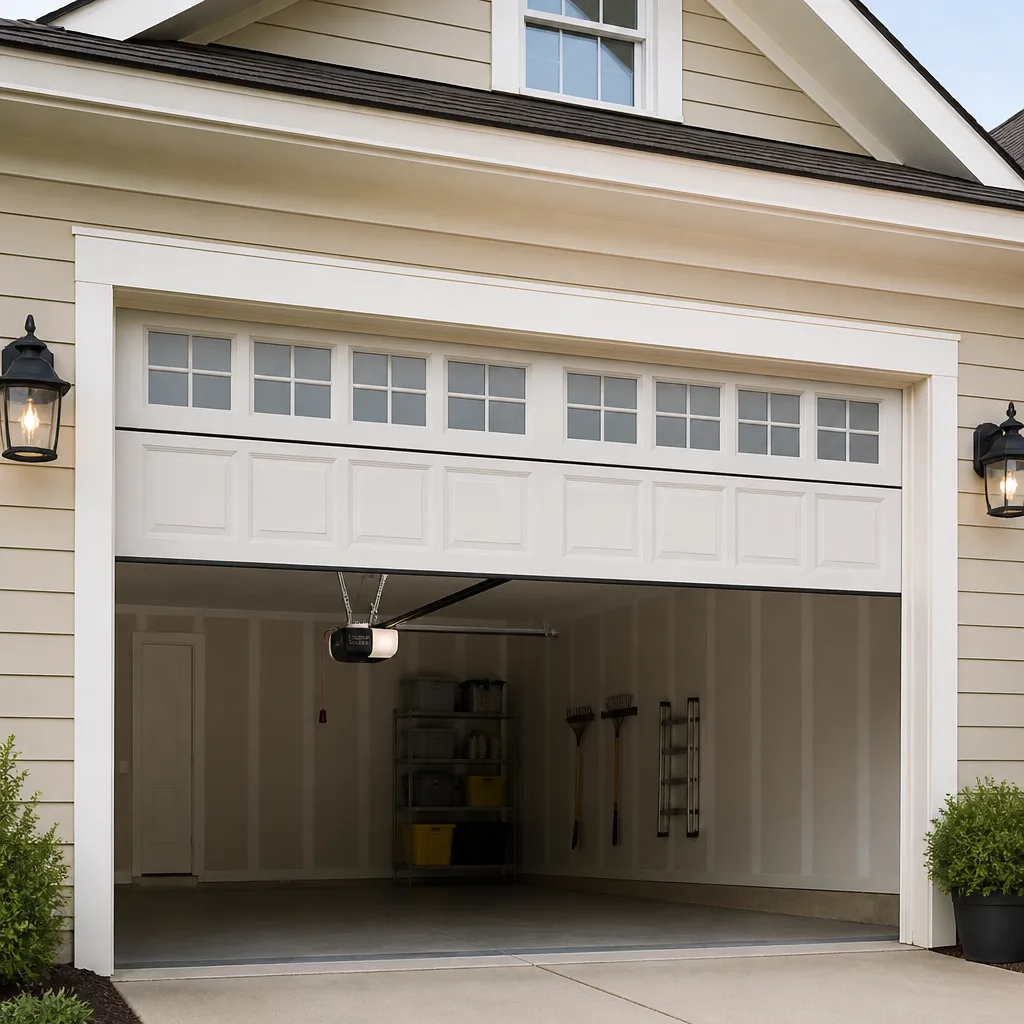 Chamberlain openers
Full 25-point door and opener safety check with every visit - springs, cables, rollers, tracks, and your LiftMaster or Chamberlain opener included
You get a price before we start. It does not change when the pro arrives.
Get your free estimateDIY vs Professional Garage Door: The Lynn Homeowner’s Decision Guide
Most garage door advice online treats “do it yourself or call a pro” as a single question about skill. It isn’t. A garage door is four or five different systems bolted together, and the DIY answer is completely different for each one. Replacing the rubber seal along the bottom of your door is a screwdriver job. Adjusting a torsion spring is a job that kills people when it goes wrong, and that spring ships to your door with no installation instructions and no warning about the tension math needed to size and wind it. This guide breaks the question down component by component, so you know exactly which jobs are safe to take on in your own Lynn garage and which ones belong in trained hands. We’ll cover the physics, the honest costs, and how to spot a quote that’s selling you something you could do yourself.
Quick Answer
Safe DIY garage door tasks in Lynn are lubrication, weatherstripping and bottom seals, hardware tightening, sensor alignment, and most opener programming and smart-home pairing. Never DIY torsion or extension spring replacement, cable replacement, or anything that involves winding or cutting a part under tension – those have caused serious injuries and fatalities and require trained, experienced hands. When in doubt, the free estimate removes the guesswork.
Styles & brands we work with
- Raised-panel steel
- Carriage house
- Modern flush
- Full-view glass
- LiftMaster openers
- Chamberlain openers
Table of Contents
- The task-by-task breakdown
- Why torsion springs are in a different category
- What a failed DIY attempt actually costs in Lynn
- The genuinely DIY-friendly jobs
- Opener programming and smart-home pairing
- How to read a professional quote without being upsold
- Common mistakes to avoid
- When to call a professional
- Frequently asked questions
The Task-by-Task Breakdown
Here’s the core of the whole decision. Every job inside your garage door falls into one of three buckets: do it yourself without thinking twice, do it yourself carefully with a caveat, or don’t touch it under any circumstances. Getting that classification right is what separates a saved service call from an emergency room visit.
Do-it-yourself safe:
- Lubricating rollers, hinges, and tracks with a proper door lubricant
- Replacing the weatherstripping or bottom seal so weather stays outside
- Tightening loose hinge and bracket bolts (with the door closed and the power disconnected)
- Clearing debris from the tracks and wiping them down
- Aligning safety sensors and cleaning their lenses
- Programming a remote or keypad, and pairing a smart-home hub
DIY with real caveats:
- Sensor alignment where wiring looks damaged – stop and call if you see frayed wires
- Track adjustment for minor misalignment only; bent or kinked tracks need a pro
- Replacing a broken remote battery or resetting a logic board after a power surge
Never DIY:
- Torsion spring replacement or adjustment
- Extension spring replacement
- Cable replacement or re-spooling
- Anything requiring a winding bar, cable clamp, or tension release
- Replacing the bottom bracket (the plate the cable attaches to, which carries spring tension)
- Working on a door with broken springs still under load, even just to open it
That second “never” list is where the injury statistics live. Everything else is genuinely fair game for a homeowner with tools and patience. In our experience across Lynn, most emergency calls come from one of those four never-DIY items, not from a botched lubrication job.
Why Torsion Springs Are in a Different Category
A torsion spring holds the full weight of your garage door in stored torsion energy, and it’s under that load every minute of the day, whether the door is up or down. When it fails under tension, all that energy releases at once – that’s why spring failure is the one garage door hazard that has caused fatalities, not just cuts and bruises. The spring doesn’t warn you. It doesn’t sag visibly first. It snaps.
Here’s what’s genuinely dangerous about the DIY version:
- Sizing math. A torsion spring has a wire gauge, an inside diameter, and a coil length that all have to match your door’s weight and balance point. Get any one wrong and the door either won’t lift or slams down with no control.
- Winding tension. You have to wind a specific number of turns – a quarter-turn count that depends on door height and drum size – using two winding bars. If you let the bar slip out of a partially wound spring, it swings around at speed. People have died from that.
- No instructions in the box. Replacement springs are sold online with no warning label, no installation guide, and no mention of the tension calculation. The spring arrives as a metal cylinder. Everything you need to know, you have to already know.
- The bottom bracket is under load too. Even if you’re not touching the spring, the plate at the bottom corner of the door carries cable tension. Loosen the wrong bolt and the cable snaps.
“I watched a video” is not a qualification here. A video can’t see your door’s weight, can’t check whether your drum and cable are already worn, and can’t stand beside you when the winding bar slips. Our technicians have up to 14 years of experience and treat garage door spring repair as a core speciality for exactly this reason – it’s a job where the margin for error is measured in seconds, not inches.
What a Failed DIY Attempt Actually Costs in Lynn
When a DIY spring or cable job goes wrong, the problem almost never stays a spring problem. What happens instead is what we call repairing the repair: the initial part failure cascades into bent tracks, a warped panel, a snapped cable, and sometimes an opener that ran under load and burned out its gear assembly. Then you’re paying for two jobs instead of one.
Here are typical Lynn-area repair ranges so you can see the shape of that math. These are estimates, and the written quote we give before any work starts is what sets the final price.
| What happened | Typical estimated cost |
|---|---|
| Single torsion spring replacement (pro) | $180 – $340 per spring; a matched pair usually runs about twice that |
| Cable replacement (pro) | $150 – $280 per side |
| Panel and track repair after a forced door | $350 – $900 |
| Opener gear and logic board rebuild | $220 – $480 |
| Full door replacement after a failed repair cascades | $1,200 – $3,500 |
| Lubrication and tune-up (or paying a pro to do it) | $85 – $160 |
The pattern is consistent. A safe DIY task costs you a tube of lubricant and an hour. A failed unsafe DIY task costs the original repair plus the damage plus the emergency visit. That $180 single-spring replacement is one of the cheapest items on the list; forcing the door open on a broken spring once is where the real money goes.
The Genuinely DIY-Friendly Jobs
Nobody’s trying to talk you out of every screwdriver. These are the tasks that make real sense to do yourself in a Lynn garage, and doing them correctly extends the life of your door substantially.
Lubrication and seasonal maintenance
Once or twice a year, wipe down the tracks (no grease on the tracks – grease attracts grit, grit grinds the rollers), then lubricate the rollers, hinges, and bearings with a purpose-made garage door lubricant. This is the single highest-value thing a homeowner can do. It also gives you a reason to look at every moving part every few months, which is how you catch a worn cable or loose bracket before it fails.
Weatherstripping and bottom seal
The rubber strip along the bottom of the door and the weatherstripping around the opening take a beating from New England freeze-thaw cycles. In Lynn, that means years of expanding and contracting wood frames, ice buildup at the threshold, and rubber seals that crack and harden faster than they would in a milder climate. Replacing them is straightforward: pull the old strip, clean the channel, slide in a new one. The door doesn’t have to be under load to do it.
Sensor alignment
The safety sensors at the bottom of the tracks should face each other and light up solid. If one is knocked out of line or its lens is dirty, the door won’t close. Cleaning the lens and nudging the bracket handles most of these. The caveat: if the sensor wire is frayed or the mounting bracket is loose in drywall, stop. Damaged low-voltage wiring can also cause an opener to behave erratically, and that’s a diagnostic job.
Tightening hardware
Hinges and brackets loosen slowly from all that movement. On a door that’s sitting closed, with the opener unplugged, tightening bolts is safe and keeps rattles down. What you’re not going to do is loosen anything that carries cable or spring tension – the bottom bracket and the spring anchor plate stay untouched.
Opener Programming and Smart-Home Pairing
Programmed through the door operator itself, this is the most DIY-friendly category on the whole page, and it doesn’t void warranties. Whether your unit is a LiftMaster, a Chamberlain, or a Genie, the sequence is broadly: press the learn button on the motor head, then press the remote within thirty seconds so it registers. Keypads usually need a four-digit PIN set, then the same learn sequence.
Smart-home pairing is a slightly different animal. Wi-Fi openers (Chamberlain’s MyQ and LiftMaster equivalents being the common ones) pair through the app and your home network. If pairing fails repeatedly, the issue is usually the router’s band, not the opener. Before you call anyone, check that your phone is on the same 2.4GHz network the opener expects, not the 5GHz one.
When opener programming crosses into opener repair is when the door itself is misbehaving, not the remote. Up-and-down travel limits, force sensitivity, and safety reverse are set on the operator’s own board, and those limits are what keep your door from crushing something in the opening. If the door reverses on its own, travels unevenly, or the opener’s internal gears are grinding, that’s garage door opener repair territory. Learning your remote – DIY. Replacing a stripped drive gear or a board – not.
How to Read a Professional Quote Without Being Upsold
Protecting yourself works in both directions. You want to avoid overpaying for a job you could do safely, but you also don’t want to talk yourself out of a job that’s genuinely hazardous. The trick is reading the quote against the task-by-task breakdown above.
- Ask what the quote covers, in components. “Spring replacement” is a fair quote. “Spring and cable and tune-up bundle” should have a line-item breakdown so you can see what each piece costs.
- Classify the task. If the quote is for lubricating and balancing, that’s a DIY job and a fair estimate is modest. If it’s for spring or cable work, the pro is not optional, and the fair range is the one in the table above.
- Look for the parts list. A spring quote should name the spring type. A door quote should name the panel or the model, and if you have a Clopay or Amarr door already, the pro should recognize it and recommend matching hardware accordingly.
- Get the price in writing before work starts. A written estimate sets the final price. Any shop that won’t put it in writing isn’t worth your time, and any quote that changes once the tech is standing in the driveway is a red flag.
- Compare quotes on the same job. Cheapest isn’t the goal; comparing the same scope across shops is. An $85 “inspection” that turns into a $500 spring job is not the same quote as a $300 spring replacement with the spring type named.
We’re happy to quote a job and tell you when it’s a task you can do yourself. Knowing which side of the line you’re on protects your wallet and your family – both matter.
What Our Experience in Lynn Tells Us About Your Garage
Lynn garages take a specific beating. The mix of older housing stock and New England freeze-thaw means wood frames that move a millimeter every spring and rubber seals that crack before their time. Doors that were installed decades ago still run the original torsion springs, and those springs are at the end of their cycle life whether they look fine or not. We see more of what we call “the spring that just snapped overnight” on doors of this vintage.
The other thing we notice is openers. The most common brands already installed in Lynn homes – LiftMaster, Chamberlain, Genie, Clopay-door-equipped homes – all share one trait: they’re reliable until the gear, the capacitor, or the logic board gives out, then the door stops responding entirely. Being able to recognize a specific brand’s failure pattern (a LiftMaster gear versus a Genie safety-reverse issue) is the difference between a targeted repair and trial-and-error.
That’s the whole point of going with a specialist. “Whoever shows up with a truck” can tighten a bolt, but fewer can tell you which part of your specific system is about to fail next. Because we work across eight of the most widely installed brands and cover the whole system – opener, spring, panel, or full installation – there’s a single point of contact for everything in the garage. One call for garage door repair, one team for a full replacement.
See the difference
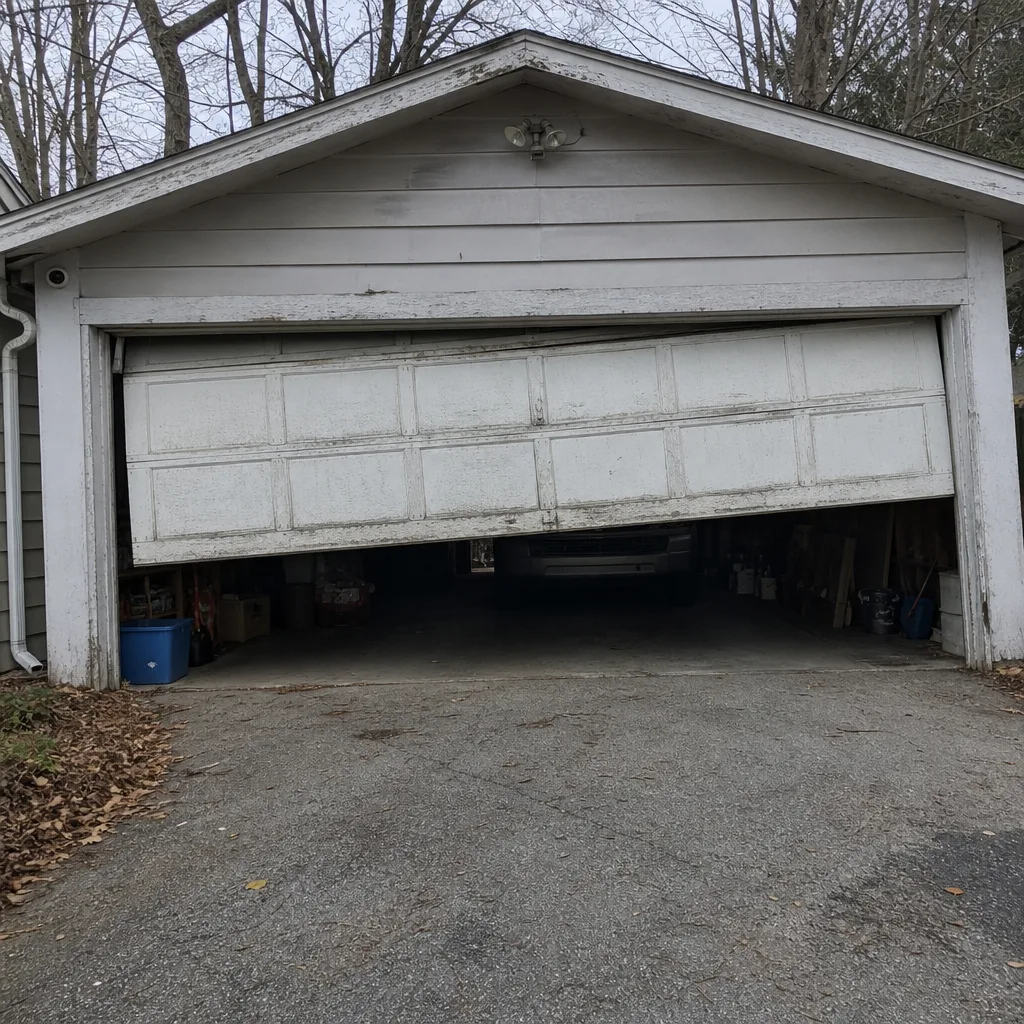 Before
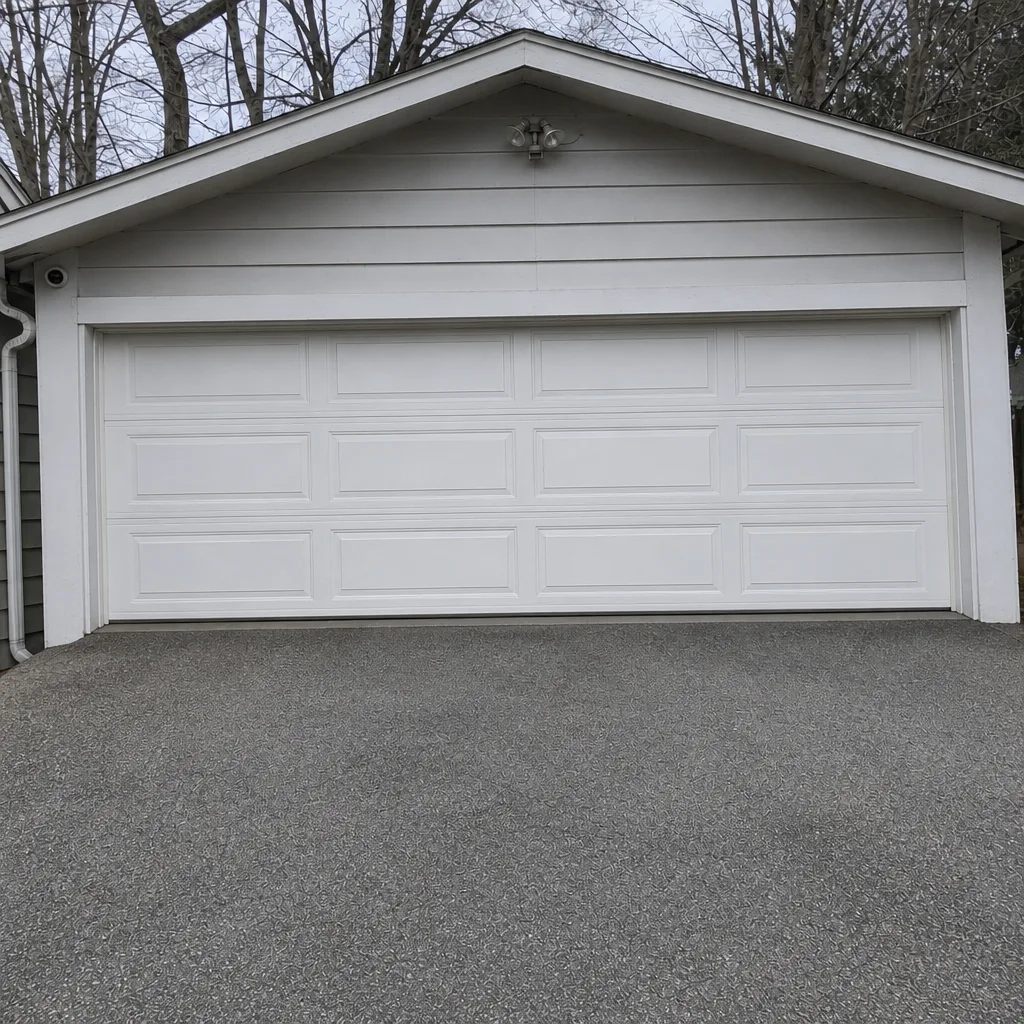 After
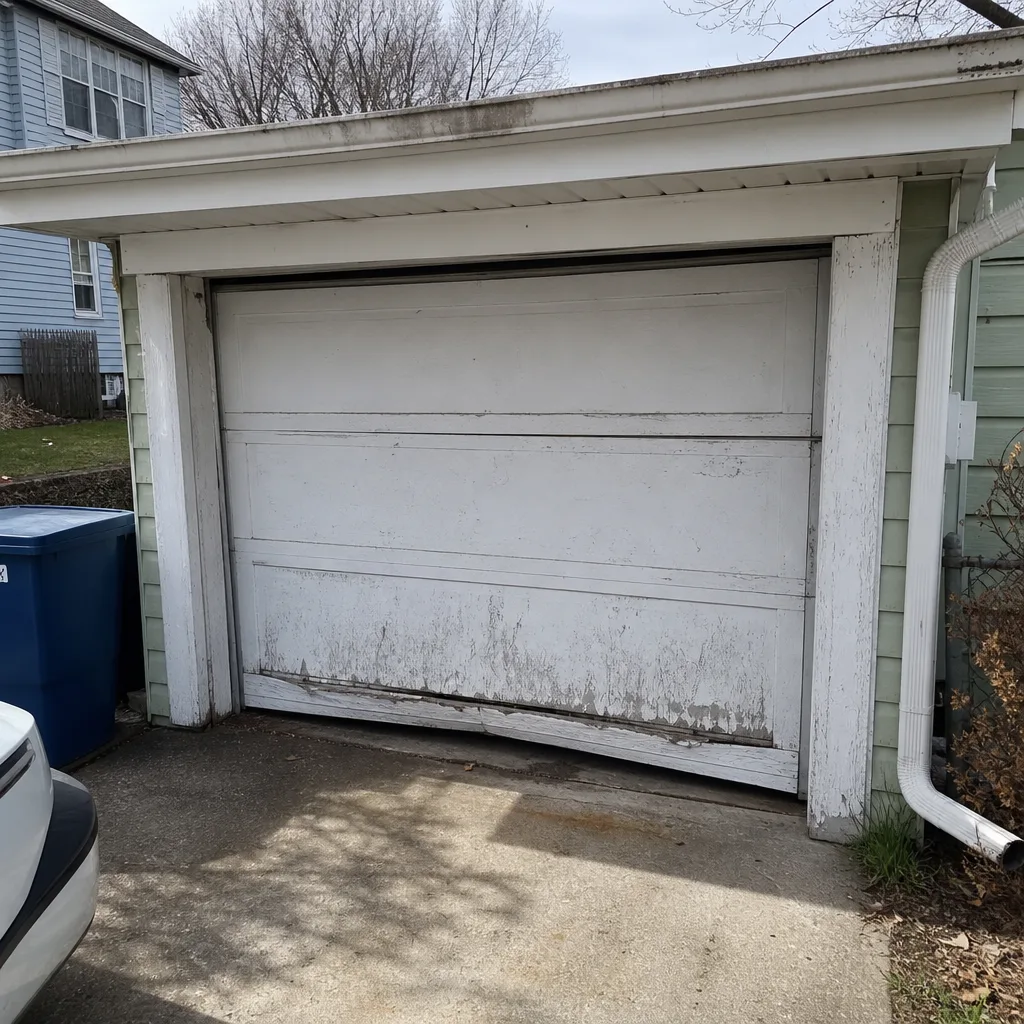 Before
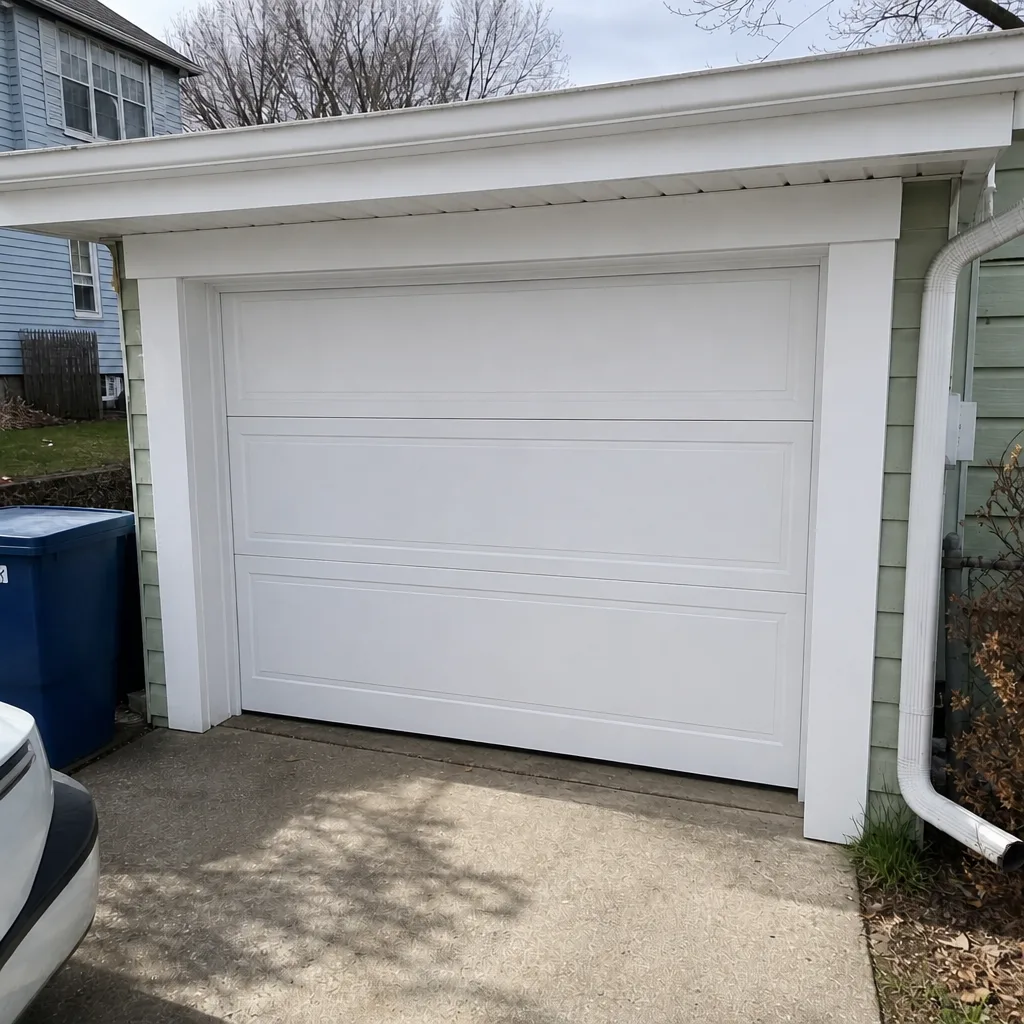 After
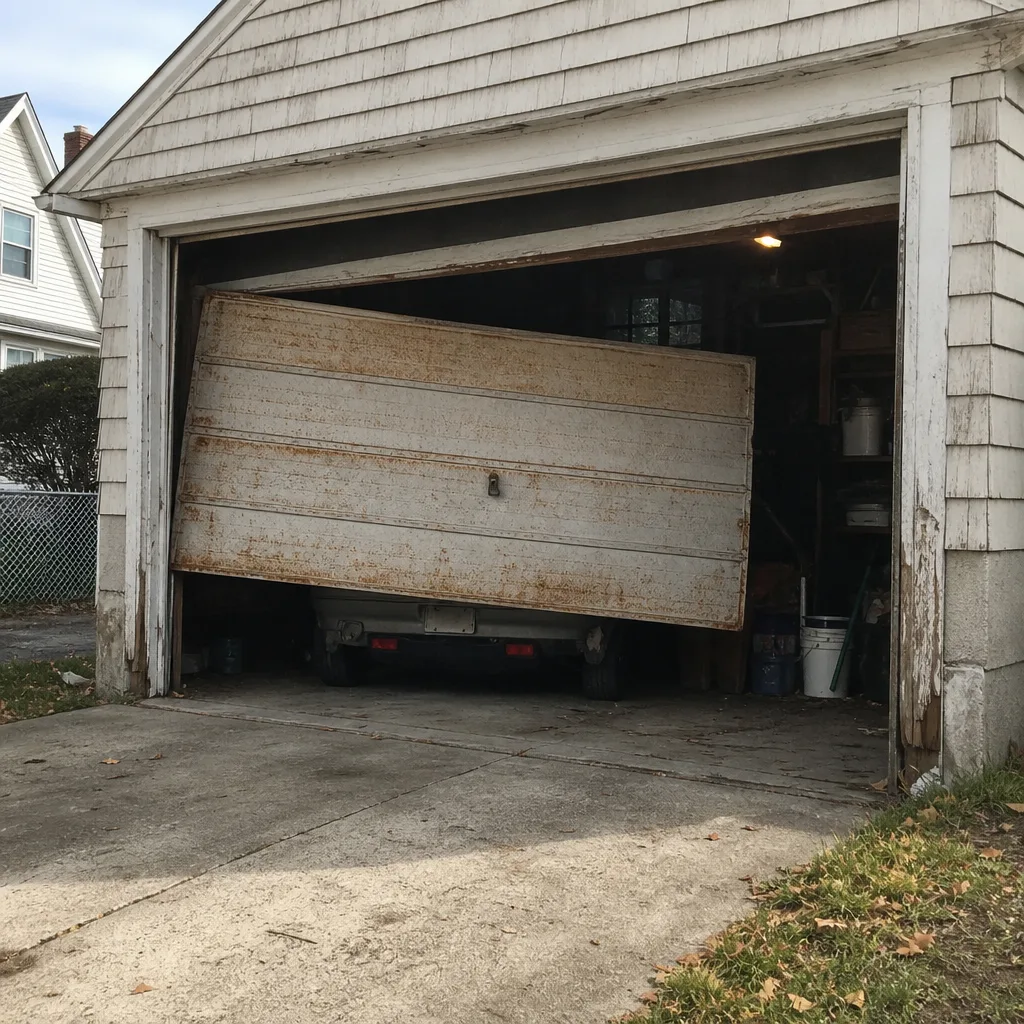 Before
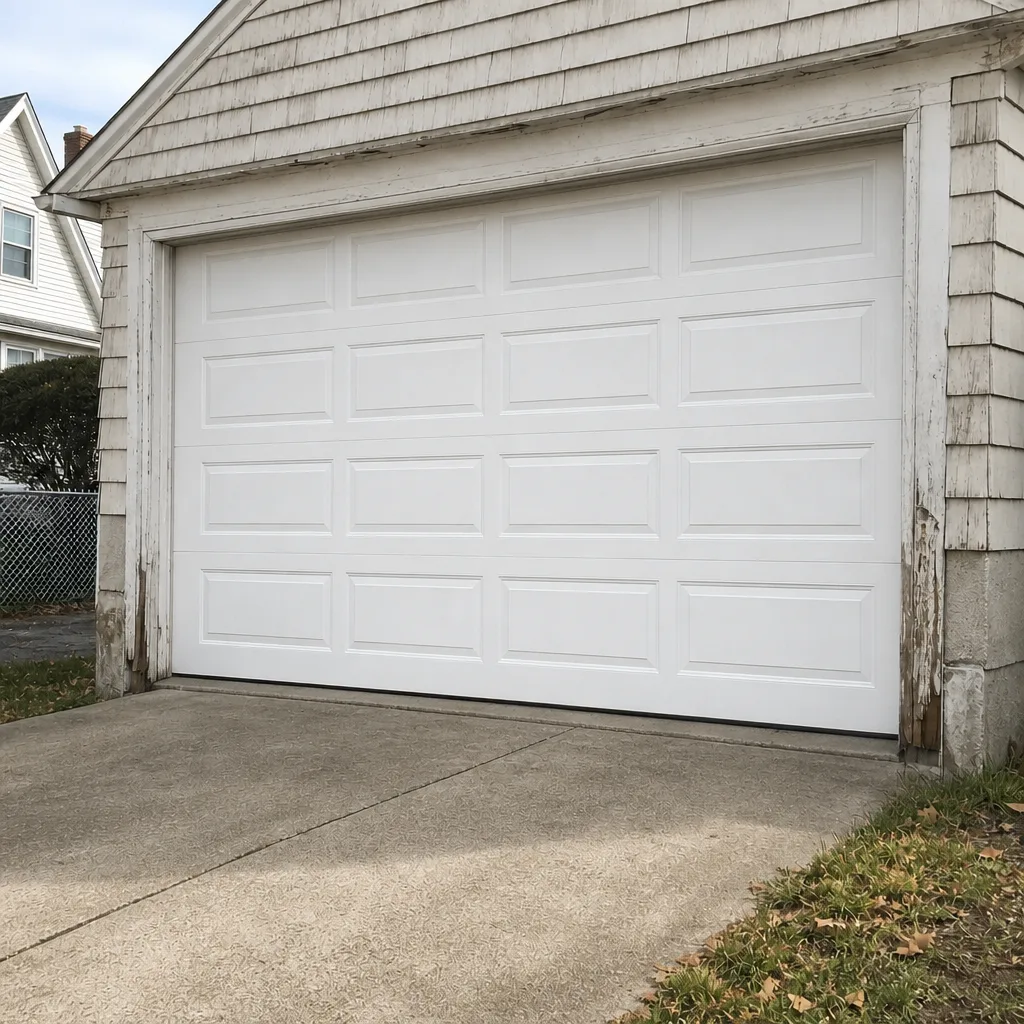 After
Common Mistakes to Avoid
- Forcing a door with a broken spring. The door is dead weight with no spring counterbalance. Pulling the manual release and forcing it up by hand sends it down hard, and the opener’s gear assembly takes the damage. Don’t.
- Buying a spring online and installing it yourself. This is the mistake that ends in injury. Springs ship with no instructions and no sizing guidance; a wrong spring is nearly as dangerous as an old one.
- Greasing the tracks. Every repair-forum post that says “lube the tracks” is wrong. Grease traps grit and grinds the rollers. Wipe, don’t grease.
- Loosening the bottom bracket to “take the tension off.” The bottom bracket carries cable tension even when the door is down and the spring is fine. That’s how cable snap injuries happen.
- Matching a remote to the wrong opener brand and blaming the opener. A Chamberlain remote won’t learn on a Genie without the right module. Check the brand before you buy a third remote.
- Ignoring sensor damage that looks like sensor misalignment. If the light won’t go solid after cleaning and aligning, the sensor or its wire is the issue, not the alignment.
- Letting a quote balloon once the tech arrives. Ask for the written estimate before work begins and hold the line. It’s your garage and your quote.
When to Call a Professional
Call a professional immediately when a spring has snapped, when a cable is hanging loose or spooled off its drum, when the door is stuck partially open, when the door is off its tracks, or when you see the bottom bracket or anchor plate has shifted. Call when a door reverses on its own, travels unevenly, or the opener grinds. Call when your door was installed long before you moved in and no one has looked at the springs in years. All of these are either genuinely dangerous or require a diagnostic ear.
Lynn Garage Door Repair Co offers free estimates in Lynn. Call (866) 570-7585. We answer 24/7. Fast dispatch from 7am to 7pm, Sunday through Friday. Same-day service applies to repair work, and every price is quoted and agreed before we start, so the estimate is the number.
Frequently Asked Questions
No. Torsion and extension springs store the full weight of the door as tension and can kill when they release under load, and the sizing and winding math requires training. Spring replacement is one of the most dangerous jobs in the trade and belongs with a trained, experienced technician. Call (866) 570-7585 for an exact quote – estimates are free.
Typical estimates in the Lynn area run $180-$340 for a single torsion spring, and because a matched pair is usually replaced together, a pair runs about twice that. The written estimate sets the final price before any work starts. Call (866) 570-7585 for an exact quote – estimates are free.
Yes. Lubricating rollers, hinges, and bearings once or twice a year is safe and extends the door’s life. Wipe the tracks clean rather than greasing them, since grease traps grit. The catch is that spring and cable work is in a different category entirely and isn’t a DIY job.
Yes. Most remote, keypad, and smart-home pairing on LiftMaster, Chamberlain, and Genie units is a learn-button sequence and is safe to do yourself. Anything involving travel limits, force settings, or internal gear and board issues crosses into opener repair – that’s not the DIY part.
No. The price is quoted and agreed before any work starts, and the written estimate is what sets the final cost. If the initial diagnosis finds something different once the door is inspected, that’s a conversation before we touch anything, not a surprise invoice afterward.
Yes. The local pro we connect you with is licensed and insured as their state requires. Our technicians have up to 14 years of experience, and we’re a specialist that works on your brand already in the garage rather than a generalist guessing at it. Call (866) 570-7585 for an exact quote – estimates are free.
Often yes for repair work. Same-day service is available, and emergency garage door service covers stuck doors, broken springs, and doors that won’t close. Call (866) 570-7585. We answer 24/7, with fast dispatch from 7am to 7pm, Sunday through Friday.
What if I’m not sure whether my job is a DIY or a pro job?
Ask. We’ll tell you honestly which tasks you can do yourself and which ones need trained hands. That’s what the free estimate is for. For the full picture on the Lynn company, start with Lynn Garage Door Repair Co, and for a full system replacement with a new door, that’s a scheduled measure-and-order job, not same-day work.
The Bottom Line
The DIY versus professional question for your garage door isn’t a personality test – it’s a decision about which component you’re touching. Lubrication, seals, sensor alignment, hardware tightening, and opener programming are genuinely yours to handle and doing them keeps your door healthy. Springs and cables are a hard no, full stop, no matter how many videos you’ve watched, and forcing a door with a broken spring turns a manageable repair into a much larger one. If your door was installed years ago and nobody’s looked at the springs since, that’s worth a professional look. For anything ambiguous, the estimate is free and the answer honest. Call (866) 570-7585. We answer 24/7, with fast dispatch from 7am to 7pm, Sunday through Friday.
Written by the team at Lynn Garage Door Repair Co.